
Tesla's "flying" Roadster: what was really shown, and what's actually taking off in Nevada and Arizona
Elon Musk finally unveiled the long-delayed Tesla Roadster, and it left the ground. Here is what the car actually did, what is still unproven, and how it compares with the electric air taxis and new mobility tech heading for the desert Southwest.
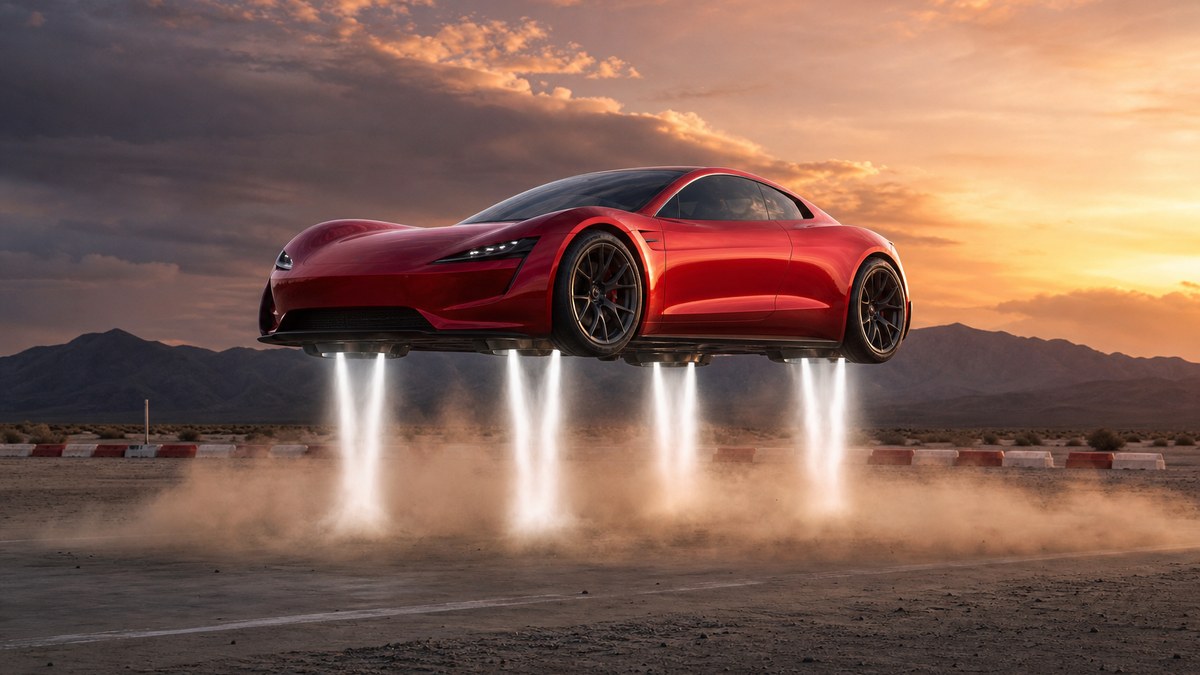
On October 15, 2026, Tesla unveiled the second-generation Roadster at a SpaceX test site near Waco, Texas. Using cold-gas thrusters fed by compressed air, a car briefly lifted off and hopped over a line of Tesla vehicles. It was a short, uncrewed demonstration, not sustained flight. Tesla is taking reservations and targets production in 2028; no price was announced and nothing about road or air approval has been disclosed.
- When and where: October 15, 2026, at an event near Waco, Texas (SpaceX's McGregor test site), after a planned October 1 reveal was postponed for weather.
- How it "flies": 10 cold-gas thrusters fed by about 600 liters of compressed, rechargeable air, according to Tesla engineering VP Lars Moravy.
- What it did: drove up an inverted ramp, spun and landed, and used thrusters to hop over a Cybercab, Cybertruck, Semi, Model Y and Model 3. Reports say nobody was aboard during the flight.
- Claims: 0–60 mph in about one second, 300 miles of range and top speeds above 230 mph across three trims. Production target: 2028. Price: not announced.
- Reservations: $50,000 for the Performance trim and $250,000 for the Thrust trim; the one-seat "Rocket" trim is invite-only.
Few products have been promised for as long as the second-generation Tesla Roadster. Musk first showed it in 2017, with deliveries promised for 2020. That date slipped again and again, through 2021, 2023, 2024 and two postponed reveals in late 2025 and 2026. Along the way Musk teased a "SpaceX package" that would let the car hover, and the internet has been arguing about whether he meant it ever since.
On October 15 he showed something. A Tesla left the ground. Whether that makes it a flying car depends on what you mean by flying, and that distinction matters a great deal for anyone in Nevada and Arizona watching the real race to put people in the air.
What did Tesla actually show?
The event took place at a SpaceX facility outside Waco, Texas. According to TechCrunch, the car used fans and thrusters to drive up an inverted ramp, spin around and land on pavement, then used its thrusters to lift itself over a row of Tesla vehicles while moving: a Cybercab, a Cybertruck, a Tesla Semi, a Model Y and a Model 3.
Tesla's engineering vice president Lars Moravy explained the system: 10 thrusters connected to about 600 liters of compressed air, which can be recharged. Tesla says the car stores high-pressure gas in carbon-fiber overwrapped pressure vessels (COPVs), the same type of tank used in rockets, placed in "every usable void" of the car.
Musk called the Roadster "the best of the last of the human-driven cars" and said the car would "puff itself up" and perform its maneuvers "whenever you'd like." He also said he was not sure the Roadster "moves the needle massively from a revenue standpoint," a reminder that this is a halo car, not a volume product.
The three trims
| Trim | Tesla's description | Seats | Reservation |
|---|---|---|---|
| Performance | "Road ready," active aerodynamics and a multi-mode suction system | 2 | $50,000 |
| Thrust | "Race ready," rear cold-gas thrusters, claimed sub-one-second 0–60 mph | 2 | $250,000 |
| Rocket | "Air ready," 10 cold-gas thrusters around the car | 1 | Invite only |
All three trims are claimed to deliver 300 miles of range and top speeds above 230 mph. Production is planned for 2028.
Is the Tesla Roadster really a flying car?
Not in the way the term is usually used. A flying car, in the sense regulators and the aviation industry mean, is a vehicle that can take off, fly a controlled route with a pilot or autopilot aboard, and land, under aviation rules. What Tesla showed is closer to a powered hop: short bursts of thrust from stored compressed air that lift the car briefly before it lands on its wheels.
Several things remain unproven, as a fact-check by Tech Insider laid out after the event:
- Sustained flight. The demonstration showed brief airborne hops, not flight over any distance.
- A crewed flight. Musk said the car flew empty to avoid hurting anyone if the maneuver failed.
- Public access to the flying mode. The thruster-heavy "Rocket" trim is invite-only.
- Road and air approvals. No pricing or regulatory filing has been disclosed, so there is no evidence the car can yet be legally driven on public roads, let alone flown.
Skeptics were not shy. Tech reviewer Marques Brownlee suggested the announcement might be a prank, pointing to a curb weight he put at over 4,000 pounds. Earlier in the year Musk himself said "safety is not the main goal" for the car and that Tesla would "aspire not to kill anyone in this car."
As engineering theater, the Roadster delivers: compressed-gas thrusters strong enough to lift a car are genuinely hard, and borrowing rocket hardware for a road car is a very Musk idea. But a few seconds of thrust from a tank of air is a stunt, not transportation. The flying-car future that will actually carry people over Phoenix or Las Vegas looks very different: quiet, battery-electric aircraft certified by the FAA and flown on fixed routes.
What does "flying car" really mean in 2026?
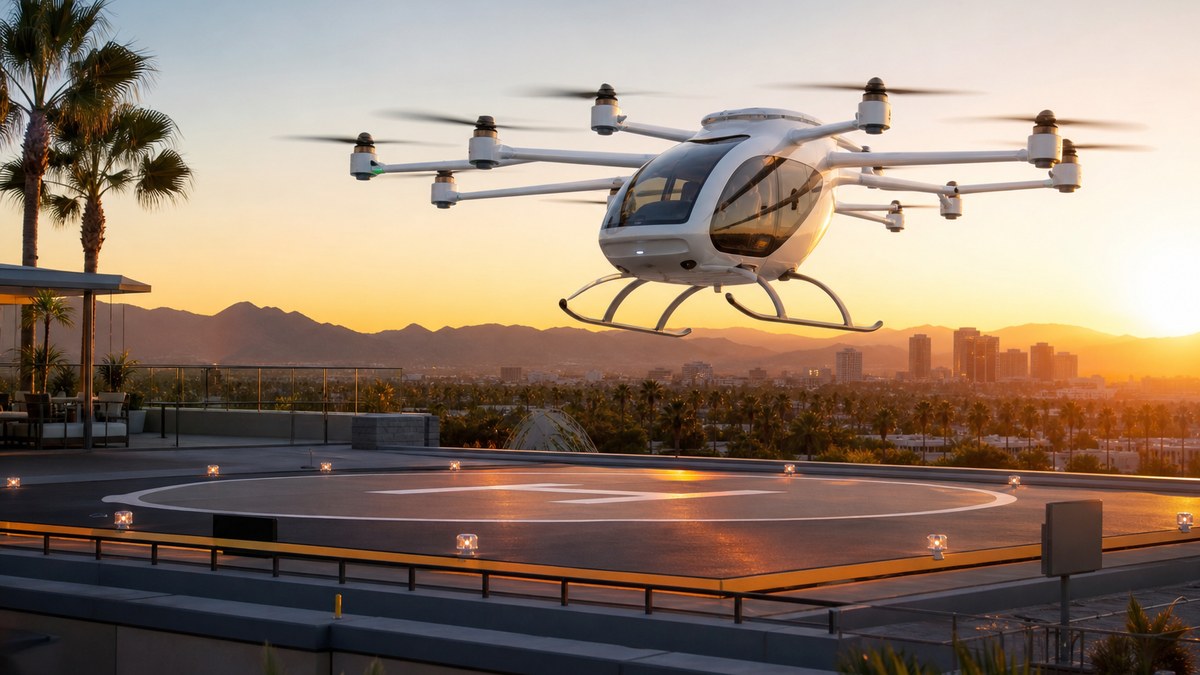
The serious version of the flying car is the eVTOL: an electric vertical take-off and landing aircraft, essentially a quiet, battery-powered air taxi with multiple rotors. Companies such as Joby Aviation, Archer Aviation, BETA Technologies and Wisk have spent years and billions of dollars working toward FAA certification.
In March 2026 the U.S. Department of Transportation and the FAA announced the first eight projects in the eVTOL Integration Pilot Program (eIPP), a program launched by a June 2025 executive order to get these aircraft flying in real airspace. The FAA said public operations were expected to begin by summer 2026. The selected lead agencies were the Port Authority of New York and New Jersey and the transportation departments of Texas, Utah, Pennsylvania, Louisiana, Florida and North Carolina, plus the City of Albuquerque.
Where do Nevada and Arizona fit in?
Neither Nevada nor Arizona was named as a lead agency in the first eight eIPP projects. But both states are positioning themselves for advanced air mobility and next-generation transportation.
Arizona: laying the groundwork for vertiports
Arizona passed S.B. 1307, signed by Governor Katie Hobbs in May 2025 and effective September 26, 2025. According to a summary by the law firm Snell & Wilmer, it requires the Arizona Department of Transportation to add vertiports and charging stations for electric aircraft to its statewide aviation plan by September 1, 2026, to appoint an Advanced Air Mobility specialist to help local governments with planning and zoning, and it limits local rules that conflict with aircraft operations. Reporting in March 2026 also noted that Joby Aviation's autonomous-flight testing under the federal program covers Western U.S. environments through Utah's program, which includes multiple states.
Nevada: Musk's other moving machines
Nevada already hosts two of Musk's most important mobility projects, neither of which flies:
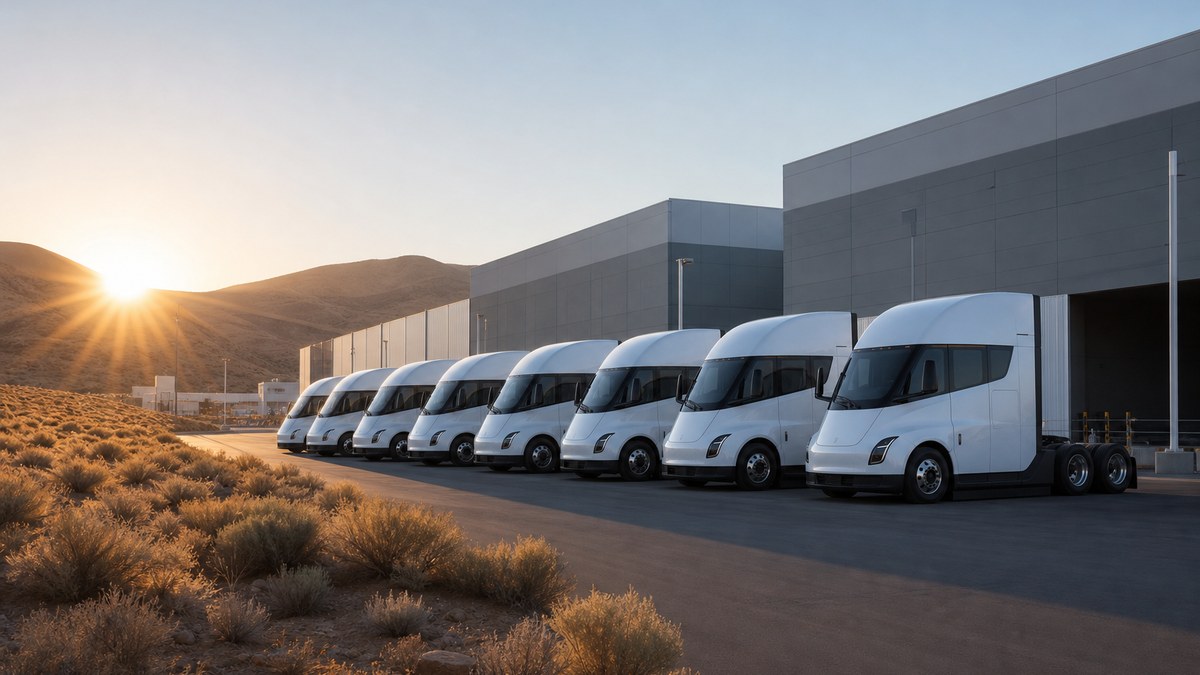
- Tesla Gigafactory Nevada. Tesla said on April 29, 2026 that the first Semi electric truck had rolled off its new high-volume line at the plant near Sparks. The roughly 1.7-million-square-foot facility, expanded with a $3.6 billion investment announced in 2023, has capacity for up to 50,000 Semis a year, according to Automotive World. Production is tied to output of Tesla's 4680 battery cells at the site.
- The Vegas Loop. The Boring Company runs Tesla vehicles through tunnels beneath Las Vegas. FOX5 reported in September 2026 that the system had 14 stations, including Resorts World, Encore, Fontainebleau and Sahara, with an extension toward Paradise Road under way and an eventual link to Harry Reid International Airport with no completion date announced. Clark County has approved the network for 123 stations, and the company says its station count will double by the end of 2026.
For Nevada and Arizona, the practical story is not a hopping sports car. It is heavy electric trucks built in Northern Nevada, an underground transit network growing under the Strip, and Arizona writing vertiports into its aviation plan before the aircraft arrive. The desert's open airspace, clear weather and fast-growing metros make the region a natural candidate for the next wave of air taxi programs, and the states that plan for power, landing sites and zoning first will get them first.
How does the Roadster compare with real air taxis?
| Tesla Roadster (thrust trims) | eVTOL air taxi | |
|---|---|---|
| What lifts it | Cold-gas thrusters fed by compressed air | Electric rotors powered by batteries |
| Flight shown | Brief hops, uncrewed | Piloted test flights; FAA pilot program operations planned from 2026 |
| Main purpose | Performance road car with stunts | Passenger and cargo transport on routes |
| Regulator | Road approval not disclosed; no aviation filing disclosed | FAA aircraft certification and operating rules |
| Timeline | Production targeted for 2028 | Early operations in selected U.S. pilot regions |
Why does the compressed-air approach matter?
Compressed gas is a simple way to get a lot of thrust for a very short time. That is useful for a dramatic launch or a hop, and it can be refilled. But a tank of air holds very little energy compared with a battery or fuel, so it cannot keep a heavy car in the air for long. That is why the realistic use is short bursts, not travel. For engineers, the more interesting questions are about the high-pressure storage itself: carbon-fiber overwrapped pressure vessels are lightweight and strong, but they are also the type of tank linked to past rocket failures, and putting them in a road car will raise safety questions any regulator will want answered.
Why did the Roadster take nine years?
The second-generation Roadster was first shown at the end of 2017, alongside the Tesla Semi, with deliveries promised for 2020. Early buyers put down large deposits: Founders Series buyers paid $250,000 for one of 1,000 cars under the original reservation program, according to TechCrunch. Then Tesla's priorities shifted to mass-market vehicles, the Cybertruck, batteries and autonomy, and the Roadster slipped year after year, through 2020, 2021, 2023 and 2024. In 2024 Musk posted that Tesla had "radically increased the design goals" for the car, and the SpaceX-derived thruster idea became part of the pitch.
The Semi, revealed the same night in 2017, tells a similar story. It was promised for 2019 and reached volume production in Nevada only in April 2026, about seven years late, according to Automotive World. For buyers and for the communities hosting Tesla's factories, the lesson is the same: Tesla's timelines are aspirations, and the product that eventually ships can look quite different from the one first shown on stage.
Musk himself was frank that the Roadster is not a major business line. He said he was not sure it "moves the needle massively from a revenue standpoint." Its real job is to show off engineering and keep attention on the brand while the company's money comes from mainstream cars, energy storage, trucks and, it hopes, autonomous robotaxis such as the Cybercab the Roadster hopped over at the unveiling.
What should Nevada and Arizona watch next?
- Roadster details. Price, final specs, safety testing and whether any version is approved for public roads before the 2028 production target.
- FAA air taxi milestones. Certification progress for Joby, Archer and others, and whether new eIPP rounds add sites in the Southwest.
- Arizona vertiport planning. ADOT's statewide aviation plan updates under S.B. 1307, and which cities start zoning for vertiports.
- Gigafactory Nevada ramp-up. How quickly Semi output and battery-cell production scale in Storey County.
- Vegas Loop expansion. New stations along Paradise Road and progress toward the airport connection.
- Power. Every one of these technologies, from air taxis to electric trucks, needs more electricity and charging infrastructure in fast-growing desert cities. That is where the energy story and the mobility story meet.
Building mobility or energy tech in Nevada or Arizona?
SHYNE covers the technology and energy projects reshaping the desert Southwest. Send us your story, project or announcement.
Email hgm@shyneltd.comFrequently asked questions
Can the new Tesla Roadster really fly?
It can briefly leave the ground. At its October 15, 2026 unveiling, a Roadster used 10 cold-gas thrusters fed by compressed air to hop over a line of Tesla vehicles. That is a short powered hop, not sustained or crewed flight.
When will the Tesla Roadster go on sale?
Tesla says production is planned to begin in 2028. Reservations opened at the unveiling: $50,000 for the Performance trim and $250,000 for the Thrust trim. No final price was announced.
How fast is the new Roadster?
Tesla claims 0 to 60 mph in about one second for the thrust-equipped version, more than 230 mph top speed and 300 miles of range. These figures have not been independently tested.
Where was the Tesla Roadster unveiled?
At a SpaceX test facility near Waco, Texas, on October 15, 2026, after a planned October 1 event was postponed because of weather.
Is the flying Roadster street legal?
Tesla has not disclosed any road or aviation approvals. Reports before the event said the limited thruster-equipped version might not be street legal. Until filings or approvals are public, that remains unconfirmed.
What is an eVTOL?
An electric vertical take-off and landing aircraft: a battery-powered air taxi with several rotors that takes off and lands like a helicopter but is quieter. Companies such as Joby and Archer are working through FAA certification.
Will air taxis fly in Arizona or Nevada?
Neither state was a lead agency in the FAA's first eight eVTOL pilot projects announced in March 2026. Arizona has passed a law requiring vertiports to be added to its aviation plan by September 2026, which prepares the state for future operations.
What does Tesla build in Nevada?
Gigafactory Nevada near Sparks makes batteries and, since April 2026, Tesla Semi electric trucks on a high-volume line with capacity for up to 50,000 trucks a year.
What is the Vegas Loop?
An underground transportation system built by The Boring Company that carries passengers in Tesla vehicles between stops in Las Vegas. As of September 2026 it had 14 stations, with 123 approved by Clark County.
Keep reading
Sources
- TechCrunch, Tesla reveals SpaceX-powered Roadster that flies and falls with style (Oct. 15, 2026).
- Tech Insider, Tesla Flying Roadster: 5 facts confirmed, 3 unproven (Oct. 16, 2026).
- InsideEVs, Tesla's "flying Roadster" may debut alongside a street-legal version.
- Federal Aviation Administration, FAA unveils eight eVTOL Integration Pilot Program projects (March 9, 2026).
- Snell & Wilmer, Cleared for takeoff: Arizona's flight path to advanced air mobility.
- ePlane AI, California air taxi company to test autonomous flight technology in Arizona (March 16, 2026).
- Automotive World, Long-awaited Tesla Semi enters volume production in Nevada (April 30, 2026).
- FOX5 Las Vegas, Boring Company expansion pushes Vegas Loop toward Paradise Road (Sept. 14, 2026); Tesla North, Boring Company says Vegas Loop stations will double by year-end.
SHYNE reports on technology and energy for general information. Specifications and timelines are as stated by the companies and sources listed and may change. Nothing here is investment advice.