AI data centers in Nevada and Arizona: the power, water and gas-plant fight explained
Private gas plants for data centers, a utility plan under review this week in Carson City, and Arizona utilities running short of reserve power. Here is where the AI build-out in the desert Southwest stands, what is confirmed, and what it could mean for your power bill and water supply.
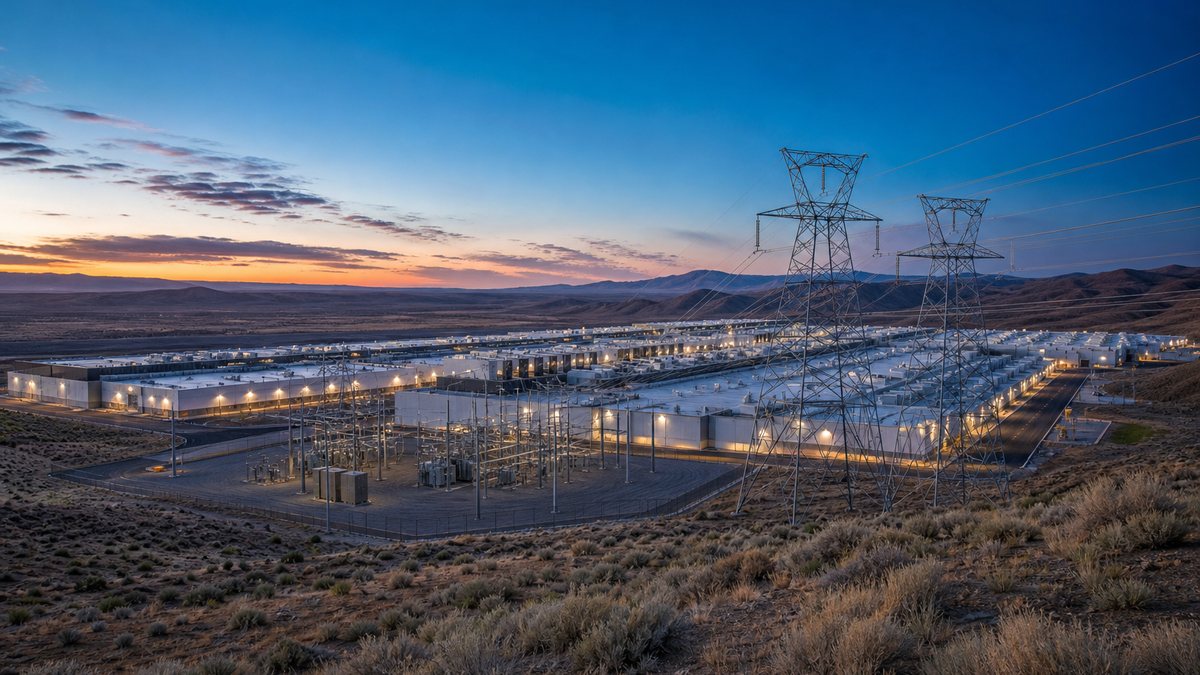
AI data centers are now the biggest force reshaping power planning in Nevada and Arizona. Nevada regulators approved two private gas plants for data centers in September and are weighing a third, 510 MW plant tied to Switch, while reviewing NV Energy's long-term plan this week. In Arizona, APS and SRP say data center demand has pushed their reserve margins to about 10%, well below their targets.
- Nevada's queue: developers have registered roughly 22,000 MW of interest in Nevada data center projects, according to coverage of NV Energy's 2026 resource plan (Nevada Globe, Oct. 12, 2026).
- Private gas plants: on Sept. 17, 2026, the Public Utilities Commission of Nevada (PUCN) approved two "temporary" gas plants, 144 MW and 218 MW, for Fleet Data Centers at the Tahoe-Reno Industrial Center (Las Vegas Review-Journal).
- A third request: Nexus Fulcrum LLC has asked to build a 510 MW gas plant at the former Sierra BioFuels refinery; Switch has disclosed it is the intended off-taker and ultimate owner (NVBEX, Oct. 21, 2026).
- This week: the PUCN is reviewing NV Energy's 2026 Integrated Resource Plan and a proposed Large Load Electric Service Agreement in Carson City (KSNV, Oct. 27, 2026).
- Arizona: APS has sought bids for 8 GW of new capacity by 2031, about 4.5 GW of it for data centers; SRP is building for 10 new data center customers needing about 2 GW (KJZZ, Oct. 26, 2026).
For most of the past decade, data centers in the desert Southwest were a quiet success story. Switch built giant campuses in Las Vegas and at the Tahoe-Reno Industrial Center. Google, Apple and Microsoft followed. Phoenix grew into one of the largest data center markets in the country. The pitch was simple: cheap land, low disaster risk, available power and friendly tax rules.
Artificial intelligence changed the scale. A single AI campus can now ask for as much electricity as a mid-sized city, and developers want it within two or three years rather than ten. That gap between what developers want and what utilities can build is the story of October 2026 in both Nevada and Arizona, and it is playing out in hearing rooms, county commission meetings and press conferences at the same time.
Why are AI data centers coming to Nevada and Arizona?
The reasons have not changed much, but they matter more now. Nevada avoids tornadoes, floods and hurricanes, and UNLV information systems professor Greg Moody told KSNV that in parts of the state "75% of the year it is 72 degrees or cooler," which helps with cooling. Electricity is relatively cheap: KSNV, citing Electricity Cost Comparison, put Nevada's rate below 13 cents per kilowatt-hour, compared with about 16 cents in Texas and almost 30 cents in California. Qualified data center developers can also receive sales tax reductions on equipment and building materials.
Land is the other draw. The Tahoe-Reno Industrial Center (TRIC) in Storey County covers 107,000 acres, an area the Review-Journal notes is larger than Detroit, and holds most of the roughly 70 data centers planned in Nevada, according to the state's Legislative Counsel Bureau. Tract Capital, the Denver-based parent of Fleet Data Centers, says it has five owned or in-development data center sites in Northern Nevada totaling 12,390 acres.
Arizona offers a similar mix: large flat parcels around Phoenix and Tucson, a growing tech workforce helped by the TSMC chip cluster, and utilities that until recently had room to grow. Market tracker Cleanview counts 95 planned data center projects in the state, which would roughly triple current data center energy use, according to KJZZ.
How much power do Nevada's data centers want?
The short answer is more than the state's grid has ever delivered. Coverage of NV Energy's 2026 Integrated Resource Plan (PUCN Docket No. 26-05007) reports that developers have registered roughly 22,000 MW of interest in Nevada data center projects. A separate count by RCG Economics, cited by KSNV, found that 39 data center projects interested in Nevada requested nearly three times the power NV Energy generated during peak hours last year.
Not all of that will be built. Developers often shop the same project in several states, and queues are notoriously inflated. But even the utility's own planning numbers are dramatic. According to the Review-Journal, NV Energy's resource plan projects data centers rising from about 5% of electricity sales today to 64% by 2046, and Nevada Current reported a projection of 82% for Sierra Pacific Power, the northern utility, by the same year. NV Energy's approved systemwide generating capacity through 2050 is about 10 GW; if the projected data center demand materializes, needed capacity could exceed 20 GW.
Estimates of data centers' current share vary with what is counted. Fortune, citing the Desert Research Institute, reported that data centers used 22% of Nevada's electricity in 2024, a share that could reach 35% by 2030. The two figures measure different things, but both point the same direction.
| Nevada indicator | Figure | Source (date) |
|---|---|---|
| Registered data center interest | ~22,000 MW | Nevada Globe on IRP docket 26-05007 (Oct. 12, 2026) |
| Projects requesting power | 39, asking nearly 3× NV Energy's peak generation | RCG Economics via KSNV (Oct. 27, 2026) |
| Data center share of NV Energy sales | ~5% now → 64% by 2046 (projection) | NV Energy IRP via Review-Journal (Sept. 23, 2026) |
| Approved system capacity through 2050 | ~10 GW; could need 20+ GW | Review-Journal (Sept. 23, 2026) |
| Planned data centers in Nevada | ~70, most at TRIC | Legislative Counsel Bureau via Review-Journal |
What is in NV Energy's 2026 resource plan?
NV Energy's Integrated Resource Plan is the 20-year roadmap that tells regulators what the utility wants to build. The 2026 plan was filed a year ahead of schedule because of data center demand. According to the Nevada Globe, the proposed portfolio includes about 4,550 MW of new renewable resources, 5,305 MW of utility-scale battery storage and 1,223 MW of natural gas peaker plants to protect reliability on the hottest summer days.
The fight is less about the mix than about who pays. Two mechanisms are at the center of the case:
- Large Load Electric Service Agreements (LLESAs). Long-term, binding contracts with very large customers, designed so that households are not left holding the bill if a data center shrinks or leaves after the utility has built for it.
- "Pay your own way." A standard under which large users fully fund the dedicated substations and lines built for them. NV Energy describes its guiding principle as "growth should pay for growth," KSNV reported.
The Nevada Bureau of Consumer Protection, part of Attorney General Aaron Ford's office, has pushed for firewalls between data center costs and residential bills. The Nevada Conservation League argues that more gas peakers could lock customers into fuel price swings and slow progress toward the state's Renewable Portfolio Standard. Hearings on large-load cost policy began Oct. 26, with hearings on the 20-year plan itself scheduled for November. Reports put a final decision between mid-December and Dec. 31, 2026.
The most important line in NV Energy's plan is not a megawatt figure; it is the contract language. Data center demand forecasts are uncertain by nature, and the risk of building for customers who never arrive is real. Binding large-load agreements, upfront payments for dedicated infrastructure and minimum demand charges are the tools that decide whether this boom lowers or raises costs for everyone else. Nevada and Arizona regulators who get those terms right will be able to say yes to more projects with less political risk.
Why are data centers building their own gas plants?
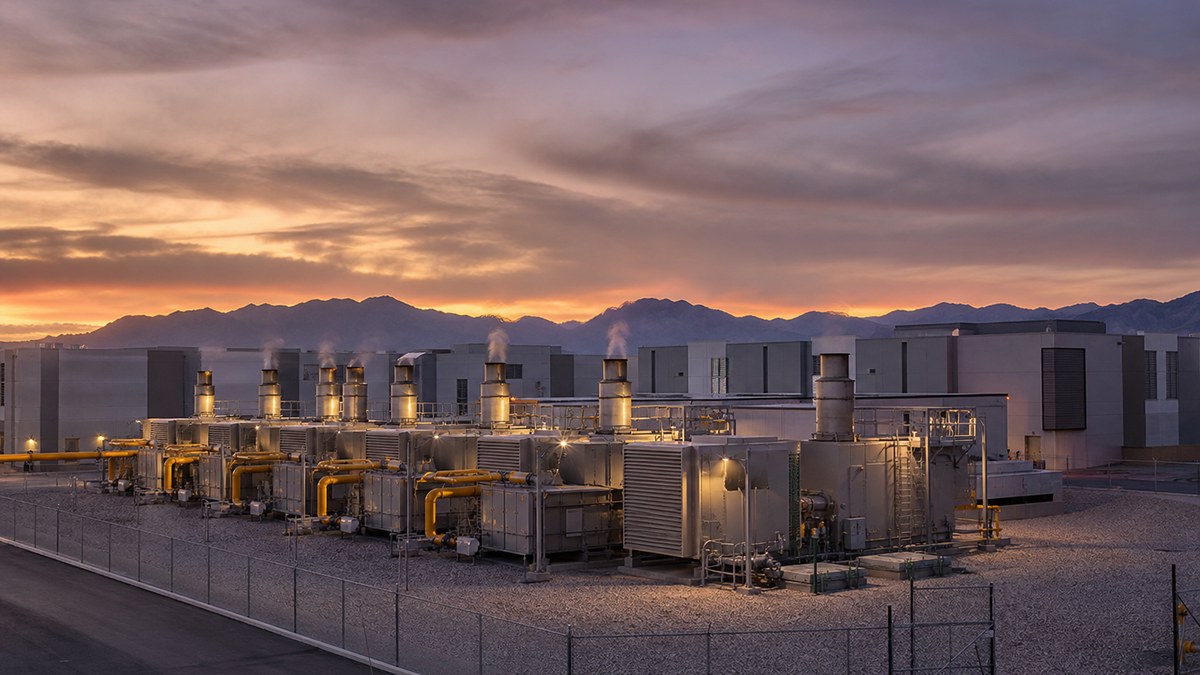
Because the grid cannot reach them fast enough. Fleet Data Centers wrote in its application that demand "is outpacing NV Energy's ability to supply power in new areas," according to the Review-Journal. Developers may wait two to three years for utility service, NVBEX reported, so some are proposing "behind-the-meter" plants: private generators on or next to their own campuses that do not rely on utility infrastructure.
The two Fleet plants (approved)
On Sept. 17, 2026, the PUCN approved two gas-fueled plants for Fleet Data Centers: 144 MW at its South Valley site at 8990 USA Parkway, Sparks, and 218 MW at its Peru Ridge site in TRIC. Fleet describes them as a "temporary two- to three-year bridge" until NV Energy can provide permanent service. Construction is slated for early 2027, and the plants still need Storey County building permits and air permits from the Nevada Division of Environmental Protection. Commissioner Randy Brown said "no permit will be issued without proper state agency oversight."
The hearing drew about two hours of mostly critical public comment. One speaker, Elizabeth Bree Kasper, said "Calling these massive natural gas facilities 'temporary' is a bureaucratic fiction." Bloomberg reported that Nvidia will lease the South Valley data center; neither company commented, so that remains unconfirmed.
The Switch-linked 510 MW plant (pending)
A third, larger request is now before regulators. Nexus Fulcrum LLC filed in June 2026 to build a 510 MW simple-cycle gas plant with nine turbines on about 20 acres of the former Sierra BioFuels refinery at the edge of TRIC. Switch bought the refinery out of bankruptcy in 2024 for more than $55 million, according to New Project Media, and has since disclosed in a filing that it is the plant's "intended off-taker" and "ultimate owner," NVBEX reported on Oct. 21. The PUCN held a hearing on Oct. 14. If approved, construction would run from early 2027 to late 2029.
According to the application, as reported by The Nevada Independent, the plant would emit more than 100 tons per year each of nitrogen oxides and carbon monoxide. NVBEX reported that operating it would use about 47 million gallons of water a year. Gas would come through a new lateral off the Great Basin pipeline system.
| Project | Size | Site | Status (Oct. 2026) |
|---|---|---|---|
| Fleet South Valley | 144 MW gas | USA Parkway, Sparks (Storey County) | PUCN approved Sept. 17; county and air permits pending |
| Fleet Peru Ridge | 218 MW gas | TRIC, Storey County | PUCN approved Sept. 17; county and air permits pending |
| Nexus Fulcrum / Switch | 510 MW gas, 9 turbines | Former Sierra BioFuels refinery, TRIC | PUCN hearing Oct. 14; decision pending |
| NV Energy peakers (IRP) | 1,223 MW gas | Systemwide | Under review in docket 26-05007 |
To put those numbers in context: The Nevada Independent reported that NV Energy expects to build about 1,200 MW of gas over several years based on current customer requests. The private Fleet and Switch-linked plants together would add close to 870 MW, most of it within a few years.
Do private gas plants get around Nevada's clean energy law?
Largely, yes, which is part of why they are controversial. Nevada's Senate Bill 358 requires electric utilities to reach a 50% Renewable Portfolio Standard by 2030. A private, self-supplying plant is not a public utility, so its output does not count toward that requirement. Hoodline reported that NV Energy was near 48% renewable compliance in 2025, and that one intervening group, Nevadans for Clean Affordable Reliable Energy, estimated that the two Fleet plants could burn roughly three times as much gas as NV Energy's Northern Nevada residential and commercial customers combined. That estimate comes from an opponent and has not been independently verified.
The industry's answer is that the gas plants are a bridge, and that long-term supply will come from the grid. Tray Abney of the Nevada Data Center Coalition pointed reporters to NV Energy's Greenlink transmission projects, which will connect the northern and southern grids, and the renewable options along those lines: "You can do solar. You can do wind. You can do geothermal." Greenlink West, a $4.2 billion, 525-kV line from Las Vegas to Yerington, is expected online in May 2027, according to Fortune.
Gas supply itself is also expanding. On Oct. 5, 2026, Pipeline & Gas Journal reported that FERC had opened its pre-filing environmental review of Great Basin Gas Transmission's proposed expansion: about 195 miles of new 42-inch mainline and 15 miles of 24-inch laterals across Churchill, Humboldt, Lyon, Pershing, Storey and Washoe counties. A formal application has not yet been filed.
How much water do Nevada data centers use?
Water is the most emotional part of the debate in the driest state in the country, and the facts are contested. At an Oct. 26 press conference in Reno covered by KOLO, Josh Dini of the Walker River Paiute Tribe raised concerns about the Monarch Data Center planned near Yerington in Lyon County: "It's on private land. And our concern is the water." Tray Abney of the Nevada Data Center Coalition said newer Nevada data centers use closed-loop cooling and that water "is not an issue" for them, while acknowledging that older facilities built 10 or 20 years ago use different technology.
Both things can be true. Closed-loop and air-assisted cooling sharply reduce on-site water use, but power plants built to serve data centers also need water: the Switch-linked gas plant alone would use about 47 million gallons a year, according to NVBEX. Nationally, The Nevada Independent cited a 2024 UC Berkeley report estimating that data centers used 17.43 billion gallons of water in 2023, a figure that could double by 2028. For comparison, the same article notes that U.S. agriculture consumed 81 million acre-feet in 2023, and one acre-foot is roughly 325,851 gallons.
The local politics are shifting too. The Nevada Independent reported on Oct. 27 that Lyon County expects to host eight data centers over the next several years, including the 500-acre Monarch project by Copia Power, even though about 200 residents turned out to oppose it, mainly over water and power. County leaders point to tax revenue: Lyon ranks last in Nevada for revenue per capita, while Storey County, home of TRIC, collects about 20 times as much per resident.
"Data centers use too much water" and "water is not an issue" are both slogans. The honest test is project by project: what cooling system, how many gallons on site, how much water at the power plant that serves it, and whose water rights it comes from. Nevada and Arizona would both benefit from requiring that disclosure, in plain numbers, at the permit stage. Projects with good answers would move faster; projects without them should not move at all.
What is happening with data centers in Arizona?
Arizona's crunch is already visible on the grid. KJZZ reported on Oct. 26, 2026 that SRP has roughly 10,000 MW of installed supply and that its customers used 9,072 MW on July 24, about 91% of it. SRP's peak was about 500 MW higher than the year before, an increase it partly attributes to large loads such as data centers. Data center customers made up about 5% of APS's peak load last year and about 7% this year. During the most recent peaks, reserve margins at both utilities were about 10%, short of APS's 15% goal and SRP's 16% target, and both peaks beat the utilities' own 2026 forecasts.
The build-out ahead is larger. Since 2023, APS has sought bids for 8 GW of new capacity to be ready by 2031, about 4.5 GW of it for data centers. APS says it took about 140 years to grow to 9 GW of peak demand. SRP is building for 10 new data center customers that it estimates will need about 2 GW, plus about 2.4 GW of transmission. SRP's Scott Scharli warned that stacking forecast assumptions "starts turning into a risk and basically a time bomb."
| Arizona indicator | Figure | Source |
|---|---|---|
| APS new capacity sought by 2031 | 8 GW (≈4.5 GW for data centers) | KJZZ (Oct. 26, 2026) |
| SRP data center pipeline | 10 customers, ≈2 GW; ≈2.4 GW transmission | KJZZ (Oct. 26, 2026) |
| Recent reserve margins | ≈10% (targets 15–16%) | KJZZ (Oct. 26, 2026) |
| Data centers' share of APS peak | ≈5% last year → ≈7% this year | KJZZ (Oct. 26, 2026) |
| Planned projects statewide | 95 (Cleanview); at least 40 "likely" (AG Kris Mayes) | KJZZ (Oct. 26, 2026) |
Arizona has also seen the strongest local pushback in the region. On Aug. 26, 2026, the Pinal County Board of Supervisors voted 4–1 to reject Vermaland's La Osa project near Eloy, which had once envisioned 59 data center buildings and 3 GW of demand before being scaled down to 11 buildings, a 500 MW on-site gas plant and up to 1 GW, KJZZ reported. In Tucson, the city revoked a temporary construction water meter used for dust control at Beale Infrastructure's Project Blue site in May 2026, after the City Council had voted the previous August to reject any involvement with the project, AZPM reported.
Will data centers raise power bills in Nevada and Arizona?
That is the question regulators in both states are trying to answer, and the evidence so far is mixed. In Arizona, APS is seeking a 14% to 16% increase in residential rates this year, according to KJZZ. Western Resource Advocates' Gwen Farnsworth said residential ratepayers are "overpaying by about $136 million" under APS's current cost allocation, and a consumer-advocate study by data analyst Abhay Padgaonkar estimated APS may have recovered up to $600 million in new fuel costs over three years from residential and small commercial customers. APS has not accepted those findings, and they are estimates from advocates.
SRP takes a different approach: it requires a data center to pay 60% of the cost of system upgrades before SRP builds anything, and it uses minimum demand charges to recover generation costs. Nevada's large-load agreement, now under review, is aimed at similar protection.
The effects can also reach beyond state lines. Fortune reported in May that NV Energy will stop supplying power to Liberty Utilities, which serves about 49,000 customers on the California side of the Lake Tahoe region, after May 2027. Liberty's filing cited transmission constraints and data center growth in Northern Nevada; NV Energy says the transition was planned for years.
What role can solar, storage and microgrids play?
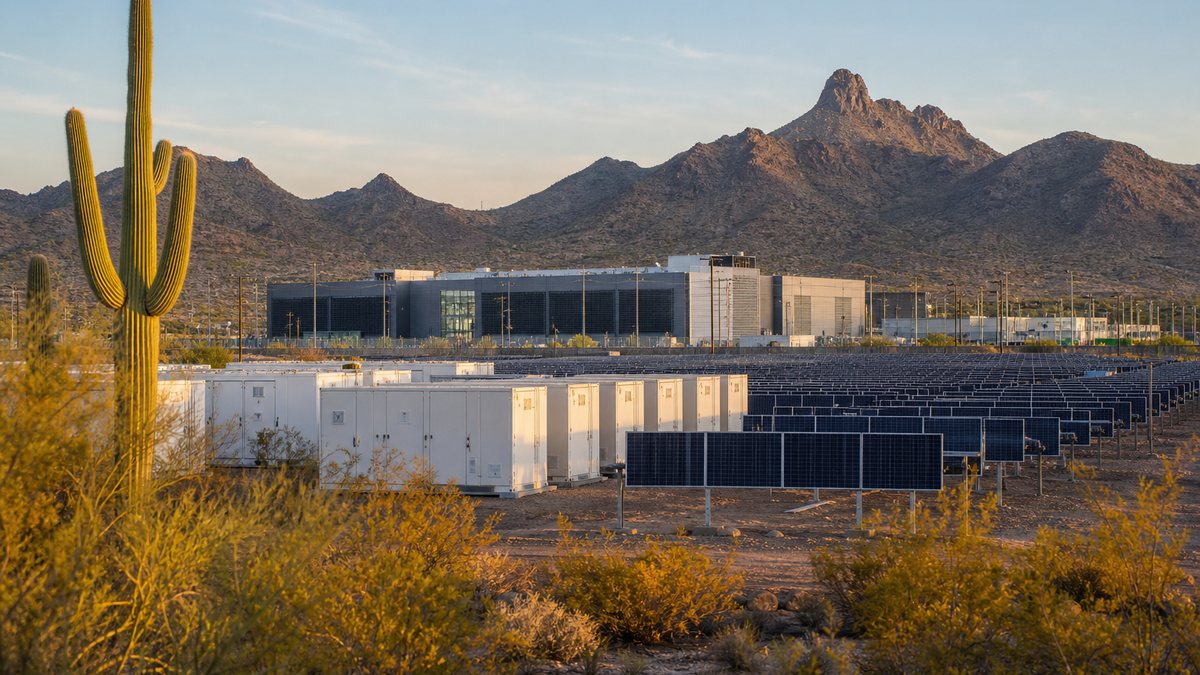
A big one, but not on the timeline developers want. NV Energy's plan already leans heavily on solar, geothermal and batteries, and the Nevada Conservation League's Bri Schmidt argued at the Oct. 26 press conference that the state should lean on solar, noting "we get over 300 days of sunshine in Nevada." Arizona's newest large solar-plus-storage projects, and nuclear output from Palo Verde, are part of the same conversation.
The engineering challenge is that data centers run around the clock and need firm power, while solar peaks at midday. Batteries can cover the evening ramp; covering every hour of every day takes far more storage, more transmission and other firm sources such as geothermal. On-site microgrids that combine solar, batteries and backup generation are one way to bridge the gap while keeping campuses resilient. SHYNE's founder, Dr. Hervé Mazzocco, worked in this field directly, leading systems integration at Petra Solar on a 5 MW solar-plus-storage microgrid in Qatar.
What should Nevada and Arizona watch next?
- The PUCN's IRP decision (docket 26-05007), expected by the end of 2026, including the final terms of the Large Load Electric Service Agreement.
- The Switch-linked 510 MW plant ruling and NDEP air permits for all three private gas plants.
- Greenlink West energizing on schedule in 2027, which would ease the northern bottleneck.
- Great Basin's pipeline expansion moving from FERC pre-filing to a formal application.
- Lyon County decisions on Monarch and other projects, and whether the 2027 Legislature tightens rules for private generation.
- APS's rate case and the Arizona Corporation Commission's approach to large-load cost allocation.
- County zoning in Arizona after La Osa, including whether Pinal and other counties write data-center-specific rules.
Working on data centers, power or water tech in Nevada or Arizona?
SHYNE covers the energy and technology projects reshaping the desert Southwest. Send us your project, filing or story tip.
Email hgm@shyneltd.comFrequently asked questions
How many data centers are planned in Nevada?
About 70 data centers are planned in Nevada, most of them at the Tahoe-Reno Industrial Center in Storey County, according to the Nevada Legislative Counsel Bureau as reported by the Las Vegas Review-Journal in September 2026.
Why are data centers building their own gas plants in Nevada?
Developers say the utility grid cannot reach new campuses fast enough, with waits of two to three years. Private behind-the-meter gas plants are proposed as temporary bridges until NV Energy can supply permanent power.
Which data center gas plants has Nevada approved?
On September 17, 2026, the Public Utilities Commission of Nevada approved two plants for Fleet Data Centers: 144 MW at South Valley in Sparks and 218 MW at Peru Ridge in the Tahoe-Reno Industrial Center. Both still need county and air permits.
Is Switch building a gas power plant?
A 510 MW gas plant has been proposed by Nexus Fulcrum LLC at the former Sierra BioFuels refinery that Switch owns. Switch disclosed that it is the intended off-taker and ultimate owner. Regulators held a hearing on October 14, 2026, and a decision is pending.
Do private data center gas plants count toward Nevada's renewable energy law?
No. Nevada's renewable standard, which requires 50% renewables by 2030, applies to electric utilities. Self-supplying private plants are not utilities, so their output falls outside that requirement.
How much water does a Nevada data center use?
It depends on the cooling system. The industry says newer Nevada data centers use closed-loop cooling with little water. Power plants serving them also use water: the proposed Switch-linked gas plant would use about 47 million gallons a year.
What is NV Energy's 2026 Integrated Resource Plan?
It is NV Energy's 20-year resource plan, docket 26-05007, proposing about 4,550 MW of new renewables, 5,305 MW of battery storage and 1,223 MW of gas peakers. Regulators are reviewing it now, with a decision expected by the end of 2026.
How are data centers affecting Arizona's power grid?
APS and SRP say data center growth pushed recent reserve margins to about 10%, below their 15% and 16% targets. APS has sought 8 GW of new capacity by 2031, about 4.5 GW of it for data centers.
Will data centers raise my electric bill?
That depends on how regulators assign costs. Utilities and regulators in both states are adding protections such as upfront payments, minimum demand charges and long-term large-load contracts so households do not pay for infrastructure built for data centers.
Why was the La Osa data center rejected?
Pinal County supervisors voted 4-1 on August 26, 2026 to reject the rezoning for Vermaland's La Osa project near Eloy. Residents raised concerns about groundwater, enforcement of conditions and power supply.
Keep reading
Sources
- KSNV News 3, Nevada regulators review NV Energy 2026 plan as data centers drive demand (Oct. 27, 2026).
- KJZZ, Arizona utilities scramble to keep up as data center boom drives rapid expansion of the power grid (Oct. 26, 2026).
- KOLO via FOX5, Advocates raise concerns over Nevada data center expansion, cite water and energy use (Oct. 26, 2026).
- The Nevada Independent via Carson Now, Rural Nevadans hate data centers. So why are their local governments doubling down on them? (Oct. 27, 2026).
- NVBEX, Switch planning 510MW natural gas power plant in Northern Nevada (Oct. 21, 2026).
- Nevada Globe, Tech giants and consumer advocates clash over NV Energy's resource plan (Oct. 12, 2026).
- Pipeline & Gas Journal, FERC opens environmental review of Great Basin's 195-mi Nevada pipeline expansion (Oct. 5, 2026).
- Las Vegas Review-Journal via GovTech, Amid data center growth, Nevada approves temporary gas plants (Sept. 23, 2026).
- Hoodline, Nevada regulators approve Storey County gas plants (Sept. 19, 2026).
- New Project Media, Developer seeks 510 MW gas plant at former Nevada biofuels site acquired by Switch (Sept. 8, 2026).
- The Nevada Independent, Nevada data center rush drives request for a novel type of gas power plant (June 26, 2026; updated Sept. 15, 2026).
- KJZZ, Pinal County rejects massive La Osa data center (Aug. 26, 2026).
- AZPM, Project Blue developers improperly used Tucson water, city has shut it off (May 6, 2026).
- Fortune, Nearly 50,000 Lake Tahoe residents face power loss as utility redirects lines to data centers (May 12, 2026).
SHYNE reports on technology and energy for general information. Figures are as reported by the sources listed, and forecasts, filings and company plans may change. Estimates from advocacy groups and companies are identified as such. Nothing here is investment, legal or financial advice.