Thacker Pass lithium mine: what's being built in Nevada, and what it means for Arizona
About 2,000 workers are now building North America's largest known lithium resource in the high desert near the Oregon line. Here is what is confirmed, what is still a company target, and why the batteries of the Southwest are watching.
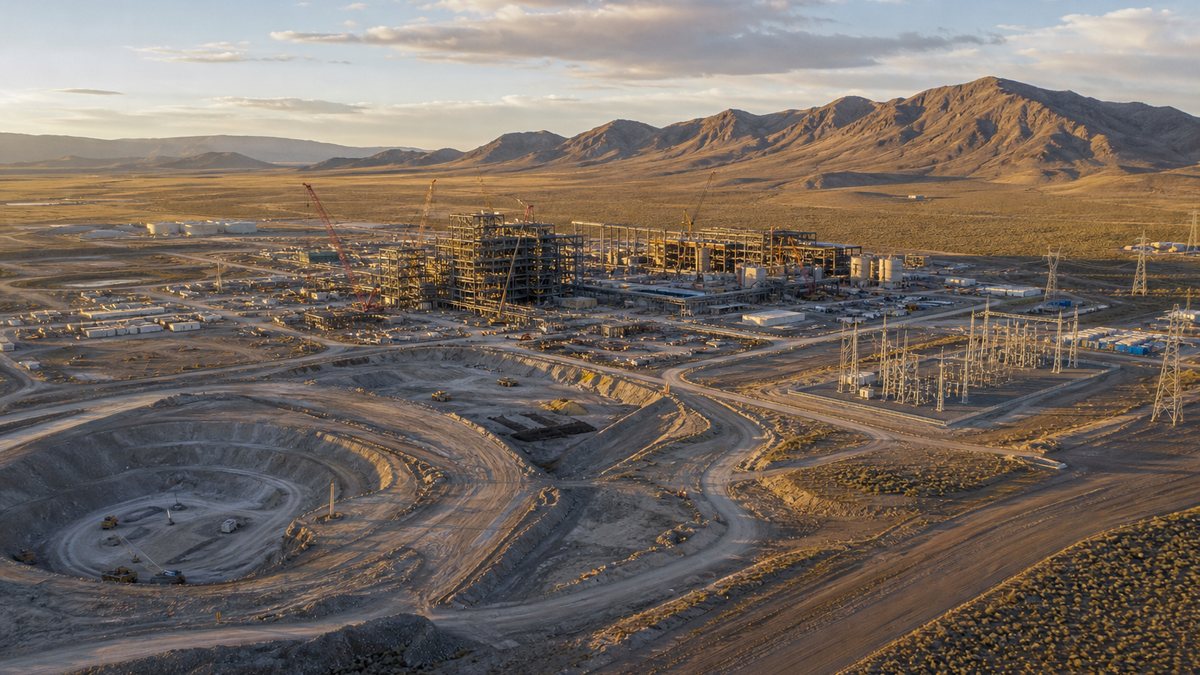
The Thacker Pass lithium mine in northern Humboldt County, Nevada, is under construction by Lithium Americas (62%) and General Motors (38%). Phase 1 is designed to make 40,000 tonnes a year of battery-quality lithium carbonate, with mechanical completion targeted for late 2027. About 2,000 people were working on site in October 2026.
- Where: the McDermitt Caldera in northern Humboldt County, about 60 miles northwest of Winnemucca and near the Oregon border.
- Who: a joint venture of Lithium Americas (62%) and General Motors (38%), per the company's August 13, 2026 results.
- Phase 1 output: a nominal 40,000 tonnes per year of battery-quality lithium carbonate.
- Schedule (company targets): energization in Q4 2026, mechanical completion in late 2027, ramp-up through 2028.
- Money: a $2.23 billion U.S. Department of Energy loan, of which $1.209 billion had been advanced by June 2026; $1.785 billion in costs capitalized by June 30, 2026.
- Workforce: roughly 2,000 on site and about 1,950 living at the Winnemucca Workforce Hub, according to an October 21, 2026 regional forum.
- Federal stake: since October 2025 the DOE holds warrants for about 5% of Lithium Americas and 5% of the Thacker Pass joint venture.
For most of the past decade, America's lithium story was a story about Nevada in the future tense. The state holds some of the richest lithium clay deposits on the continent, yet the country still produces less than 1% of the world's lithium supply, and China processes roughly 70% of it. Albemarle's Silver Peak brine operation, also in Nevada, has long been the only operating U.S. lithium mine.
Thacker Pass is the project meant to change that. After years of lawsuits, protests, a federal loan that nearly unraveled and a surprise government equity deal, the mine has moved from a permit fight to one of the biggest construction sites in the West. This explainer covers what is being built, where the money comes from, what still has to go right, and why it matters beyond Humboldt County, including for Arizona's fast-growing battery and storage economy.
What exactly is being built at Thacker Pass?
Thacker Pass is not a hard-rock mine like the lithium pits of Australia, and it is not a brine operation like Silver Peak. The ore is a lithium-bearing clay inside the McDermitt Caldera, an ancient supervolcano that straddles the Nevada–Oregon line. The clay is dug from a shallow open pit, then processed on site into lithium carbonate, the white powder that battery makers turn into cathode material.
That on-site processing is the part that makes the project unusual. According to The Nevada Independent (June 7, 2026), Thacker Pass will include one of the nation's few battery-grade lithium processing facilities. Most lithium mined elsewhere in the world is shipped to China for refining; here the plan is to go from clay to battery-quality chemical in one place.
The main pieces under construction, according to Lithium Americas filings and updates through August 2026:
- The mine and processing plant at the project site in Humboldt County, including a sulfuric acid plant. The acid is used to leach lithium from the clay, and the heat from making it drives a steam turbine generator that supplies power on site.
- High-voltage power supply. Six regional substations and switching stations are being upgraded so the project can be energized in Q4 2026 (company update, February 19, 2026).
- The Workforce Hub in Winnemucca, an all-inclusive housing camp that had more than 1,500 residents on June 30, 2026 and about 1,950 by late October.
- A transload terminal near the Winnemucca airport, where rail and truck freight (sulfur, reagents and finished product) will change modes. Construction began in March 2026 with completion targeted for 2027; it was described as about halfway done at the October 21 forum.
- A Reno technical center used for testing and operations readiness, which DOE financing officials toured in early March 2026.
Thacker Pass at a glance
| Item | Figure | Source and date |
|---|---|---|
| Phase 1 design capacity | 40,000 t/yr lithium carbonate | Lithium Americas, Aug. 13, 2026 |
| Ownership | Lithium Americas 62%, GM 38% | Lithium Americas, Aug. 13, 2026 |
| Phase 1 capital estimate | $2.93 billion (pre-tariff, Dec. 2024 technical report) | Lithium Americas |
| Costs capitalized to date | $1.785 billion (June 30, 2026) | Lithium Americas Q2 2026 |
| 2026 capex guidance | $1.3–$1.6 billion | Lithium Americas, Feb. 19, 2026 |
| DOE loan | $2.23 billion; $1.209 billion advanced | Lithium Americas Q2 2026 |
| Workers on site | ~950 (Dec. 2025) → 1,600+ (June 2026) → ~2,000 (Oct. 2026) | Company updates; Great Basin Sun, Oct. 29, 2026 |
| Mechanical completion | Late 2027 (target) | Lithium Americas |
How far along is construction?
The clearest way to see the pace is to compare the company's own numbers over 2026. At the end of December 2025, detailed engineering was 93% complete, procurement was 60% complete, and about 950 people were working on site. By June 30, 2026, engineering had passed 95%, procurement had passed 80%, more than 85% of the structural steel had arrived or was in transit, and the workforce had grown past 1,600.
The company had planned for peak construction employment of roughly 1,800 by the end of 2026. It overshot that early: at the Nevada 95-80 Futures Forum in Winnemucca on October 21, 2026, the project reported about 2,000 workers on site, according to The Great Basin Sun. The same presentation said there had been 12 minor injuries and no lost-time injuries since construction began about three years ago.
Lithium Americas' 2026 milestone list, published in February, called for high-voltage power line commissioning in Q2, completion of the main concrete in Q3 and early commissioning of individual plants in Q4. The company's next quarterly report should show whether those dates held. As of November 4, 2026, SHYNE had not seen Q3 2026 results published.
The workforce numbers are the most convincing evidence that Thacker Pass is real. You do not house nearly 2,000 people in a camp in Winnemucca for a project that is still on paper. The open question is not whether the plant gets built, but what it ends up costing and how smoothly a first-of-its-kind clay process ramps up. Those are the numbers to watch in 2027.
Who is paying for Thacker Pass?
The financing stack is a mix of a carmaker, the federal government and private capital markets.
General Motors
GM announced a $650 million investment in January 2023 and became Lithium Americas' largest shareholder and offtake partner, then invested a further $625 million in 2024 to take a 38% stake in the Thacker Pass joint venture, with rights to Phase 1 lithium. The Nevada Independent reported in September 2025 that GM had invested nearly $1 billion in the project.
The Department of Energy loan
The DOE's Loan Programs Office announced a conditional commitment in March 2024 and closed the loan under the Advanced Technology Vehicles Manufacturing program in late 2024. Lithium Americas puts the loan at $2.23 billion; news reports have often cited $2.26 billion or $2.3 billion, which includes capitalized interest.
In September 2025 the loan briefly looked shaky. The Washington Free Beacon and Politico reported that a senior DOE loan official was questioning the project's viability and that the department wanted GM to commit to buying a set amount of lithium over two decades. Nevada Rep. Mark Amodei called Energy Secretary Chris Wright to express support, and Gov. Joe Lombardo called lithium Nevada's "long-term economic salvation" (The Nevada Independent, Sept. 19, 2025).
The government equity deal
The dispute ended with an unusual arrangement. On October 7, 2025, Lithium Americas announced amended loan terms under which the DOE receives warrants for 5% of the company's equity and a 5% economic interest in the joint venture, both exercisable at one cent. In exchange, $184 million of scheduled loan payments were deferred from the first five years of repayment, and the company agreed to add $120 million to loan reserve accounts. GM also amended its offtake agreement so the joint venture can sell volumes GM is not forecast to buy to other customers.
Since then, the money has flowed. Lithium Americas received its first draw of $435 million in October 2025, a second in February 2026 and a third, $342 million, on June 3, 2026, for $1.209 billion advanced in total.
Private capital
The company also sold shares through an at-the-market program, has $195 million in notes with Orion Resource Partners and, in August 2026, signed a convertible debenture facility of up to $175 million with an affiliate of Yorkville Advisors, with $150 million at initial closing. It reported about $1.3 billion in cash and restricted cash on June 30, 2026, including $530.3 million at the joint-venture level.
| Date | Financing milestone |
|---|---|
| Jan. 2023 | GM announces $650 million investment |
| Mar. 2024 | DOE conditional loan commitment |
| 2024 | GM invests a further $625 million for 38% of the JV |
| Sept. 2025 | Reports that DOE is questioning the loan |
| Oct. 7, 2025 | Amended loan terms: DOE warrants for ~5% of LAC and 5% of the JV |
| Oct. 2025 | First DOE draw, $435 million |
| Feb. 2026 | Second DOE draw |
| June 3, 2026 | Third DOE draw, $342 million (cumulative $1.209 billion) |
| Aug. 2026 | Up to $175 million convertible facility with a Yorkville affiliate |
How much will it cost, and what has pushed costs up?
The official Phase 1 figure is still $2.93 billion, from a technical report dated December 31, 2024. Lithium Americas has said that number does not include tariffs, the impact of the Middle East conflict, fuel prices or other inflation, and it targeted a new definitive capital estimate by the end of Q3 2026. SHYNE had not seen that estimate published as of November 4, 2026.
The pressures are well documented:
- Tariffs. The company estimated total tariff exposure of $80 million to $100 million, mostly in 2026. It says about 75% of its cost structure is labor, contractors and services that tariffs do not directly hit.
- Shipping disruption. The Nevada Independent reported in June 2026 that more than 75% of the structural steel comes from the United Arab Emirates and that shipments were rerouted through Saudi Arabia's Port of Jeddah after the Strait of Hormuz closure. It put the combined tariff and conflict impact at about $120 million and the estimated capital spend at about $3 billion.
- Sulfuric acid. The same report said sulfuric acid supply had dropped and prices had risen, which could raise production costs once the plant runs. Thacker Pass plans to make its own acid from sulfur, which reduces but does not remove that exposure.
Does falling lithium prices change the picture?
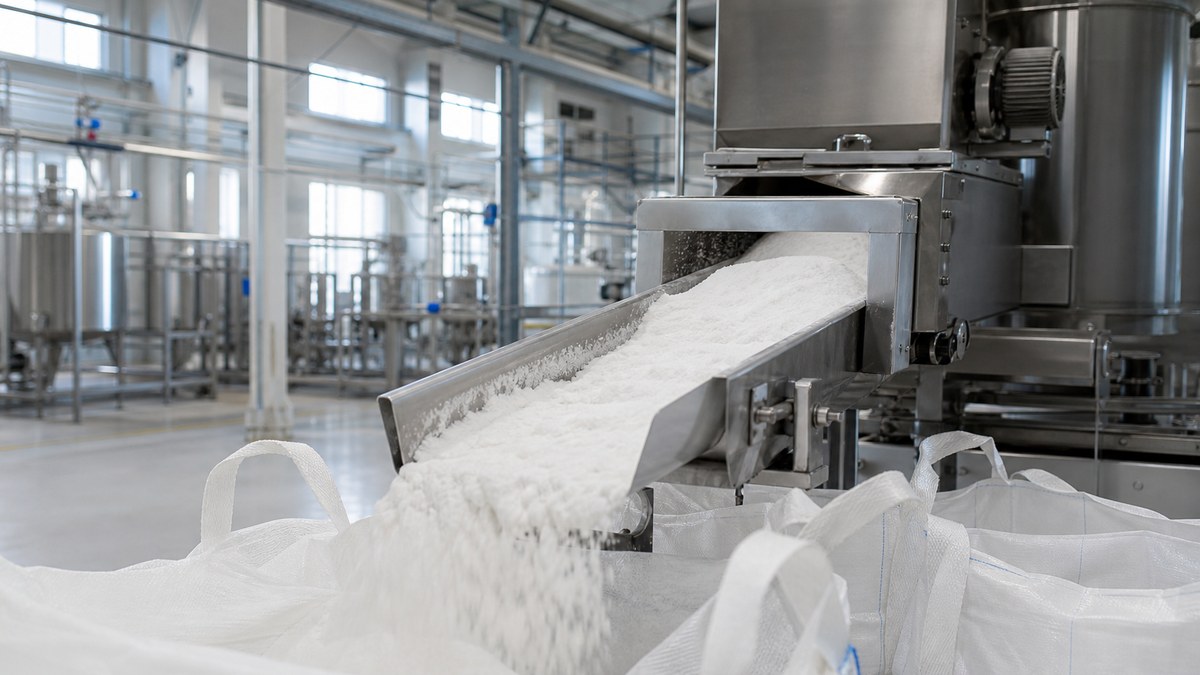
Thacker Pass is being built into a volatile market. Battery-grade lithium carbonate in China hit a two-year high of 201,000 yuan (about $30,000) per tonne on May 12, 2026, then fell roughly 21% in the third quarter to about $19,000 by the end of September. On October 12, the most active lithium carbonate futures contract in Guangzhou dropped 11.8% to about $15,650, according to Investing News Network. Analysts cited Chinese inventory revisions, destocking and restarted Australian capacity, while noting that energy-storage demand stayed strong.
Lower prices do not change construction, which is financed. They do matter for the economics once the mine produces, which is why GM's offtake and the ability to sign third-party buyers are important. They also explain why the DOE pushed for firmer purchase commitments in 2025.
The case for Thacker Pass was never that lithium prices would stay high. It is that a battery supply chain with no domestic refining is fragile, as 2026's shipping and tariff shocks showed. A U.S. plant that turns Nevada clay into battery chemical is a strategic asset even when the spot price is soft. Whether it is also a good business depends on its operating cost, which no one will know until 2028.
What about water, tribes and the environment?
Thacker Pass has been one of the most contested mines in America, and those debates are part of the story.
Permits and lawsuits
The Bureau of Land Management approved the mine on January 15, 2021, in the final days of the first Trump administration. Environmental groups, a rancher and several tribes sued. In February 2023, U.S. District Judge Miranda Du rejected most of the claims, construction started in March 2023, and the Ninth Circuit declined to block it in July 2023. Some tribes and members of the People of Red Mountain call the site Peehee Mu'huh and say it is sacred; the court did not accept that a massacre site lay within the project area. The Fort McDermitt Paiute and Shoshone Tribe signed a community benefits agreement with Lithium Americas in October 2022, and the company reported delivering $5 million to the tribe's building fund in 2026.
Water
In the high desert, water is the sharpest local issue. A rancher, Edward Bartell, challenged the company's groundwater pumping, and the state engineer issued a cease-and-desist letter in 2025. The dispute was settled on July 31, 2025, with Lithium Americas buying water rights from Bartell (The Nevada Independent, Aug. 15, 2025). The company expects to use about 200 acre-feet a year during construction and about 2,600 acre-feet a year at full Phase 1 production. Environmental review documents estimated about 5,200 acre-feet a year for a later Phase 2.
Air permits
The Winnemucca terminal is now in the permitting spotlight. Iron Horse Nevada LLC filed a permit revision with the Nevada Division of Environmental Protection covering three 19.93 million BTU-per-hour boilers, a firewater pump and a quicklime silo, with applicant-estimated greenhouse gas emissions of 32,057 tonnes of CO2 equivalent a year. As of October 6, 2026, no public comment period had been opened (W4 News).
Opponents have also signaled they will fight up to four planned future phases, according to The Nevada Independent, so Phase 1 approval does not settle the long-term footprint.
What does Thacker Pass mean for Nevada's economy?
For Humboldt County, the impact is already visible. Winnemucca is absorbing a camp of nearly 2,000 workers, a rail and truck terminal by its airport and a new wave of service demand. The company has committed $14.1 million toward a new Orovada K-8 school, which local officials expect to open for the 2027–28 school year.
The October forum also showed the strain. Turquoise Ridge, a Nevada Gold Mines operation, was recruiting about 140 people and i-80 Gold about 95, and Humboldt General Hospital said limited housing makes hiring hard. Winnemucca has water rights of about 9,400 acre-feet a year and uses about 32%, and its wastewater plant runs at about 65% of capacity, so the city has room to grow, but housing remains the bottleneck (The Great Basin Sun, Oct. 29, 2026).
Statewide, Thacker Pass sits at the front of a broader push. Nevada already hosts Tesla's Gigafactory near Sparks, which now builds the Semi alongside battery cells, and Redwood Materials' battery recycling campus near Reno. Lithium from Thacker Pass would add the raw-material end of that chain.
Nevada's other lithium projects
| Project | Developer | Status (latest reported) |
|---|---|---|
| Silver Peak, Esmeralda County | Albemarle | Operating; long the only producing U.S. lithium mine |
| Thacker Pass, Humboldt County | Lithium Americas / GM | Under construction; mechanical completion targeted late 2027 |
| Rhyolite Ridge, Esmeralda County | Ioneer | Federally approved 2024; Korean partners named June 2026; FID targeted H2 2026; first production targeted 2029; court appeal filed April 2026 |
| Tonopah Flats, Nye County | American Battery Technology Co. | Development stage; listed as a federal permitting "transparency" project |
Ioneer's Rhyolite Ridge is the next big one to watch. In June 2026, Reuters reported that the company had lined up Korea Overseas Infrastructure & Urban Development and Hyundai Engineering as partners, with a final investment decision targeted for the second half of 2026 and first production in 2029. It plans about 27,800 tonnes a year of lithium hydroxide and 135,500 tonnes of boric acid. Conservation groups appealed a court ruling upholding the project in April 2026 over habitat for Tiehm's buckwheat, an endangered wildflower.
Why should Arizona care about a mine in northern Nevada?
Arizona does not have a Thacker Pass of its own. Exploration-stage projects such as Arizona Lithium's Big Sandy have not reached construction. But Arizona is becoming one of the biggest buyers and users of battery materials in the country, and that makes Nevada lithium a regional story.
- Battery manufacturing. LG Energy Solution has been building a roughly $5.5 billion battery complex in Queen Creek, southeast of Phoenix, with cylindrical EV cells and lithium iron phosphate cells for energy storage. Production was targeted to begin in 2026. Both chemistries need lithium.
- Grid storage. Arizona led U.S. energy-storage growth in Q2 2026 with 6.2 GWh installed (KTAR, Sept. 4, 2026), as utilities add batteries to meet peak demand from heat and data centers.
- Data centers and chips. The power-hungry AI campuses and the TSMC fabs in the Phoenix area are driving much of that storage demand, which we covered in our data-center and TSMC explainers.
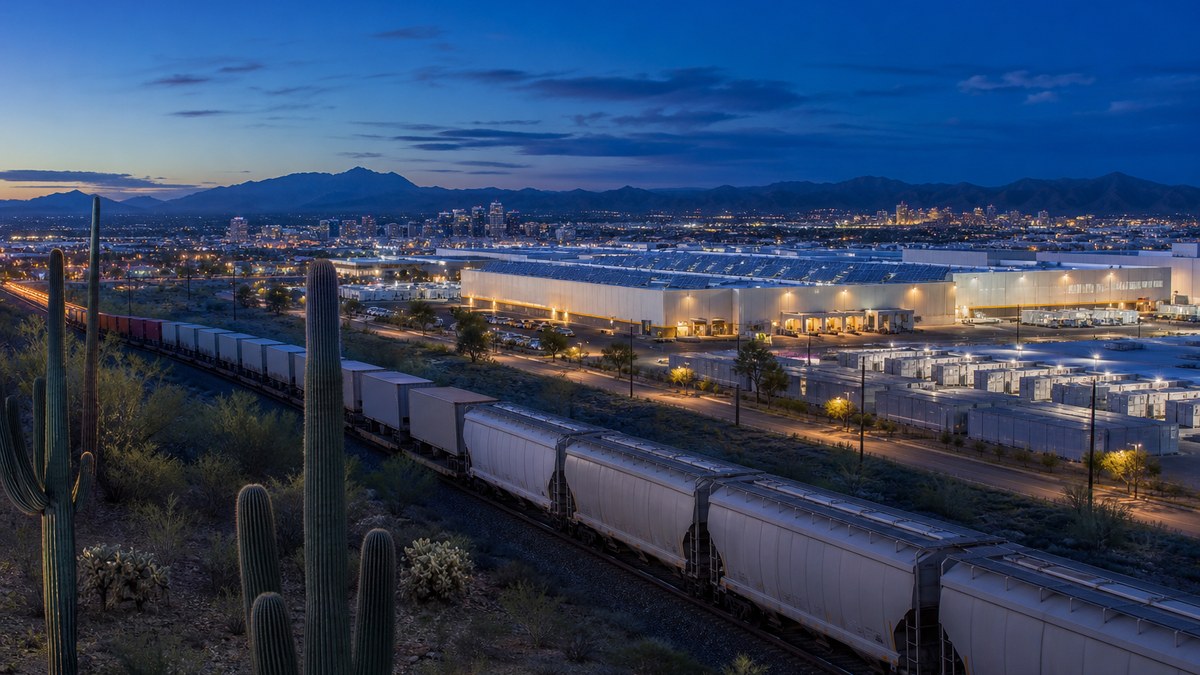
Thacker Pass's Phase 1 lithium is tied to GM, so it will not automatically flow to Arizona factories. But the October 2025 offtake change lets the joint venture sell volumes GM does not need to other buyers, and a domestic source of battery-grade lithium carbonate within a day's rail haul of the Southwest is exactly what storage and cell makers have said they want.
What should Nevada and Arizona watch next?
- The definitive capital estimate. How far above $2.93 billion Phase 1 lands once tariffs, shipping and inflation are counted.
- Q3 2026 results. Whether energization in Q4 2026 and early commissioning of plants stayed on schedule.
- Further DOE draws. About $1 billion of the $2.23 billion loan had not been advanced as of mid-2026.
- The Winnemucca terminal air permit. When NDEP opens its 30-day public notice for the Iron Horse revision.
- Offtake beyond GM. Any third-party buyer, especially a Southwest battery or storage maker.
- Rhyolite Ridge's investment decision and the outcome of the appeal.
- Lithium prices. Whether the late-2026 slump persists into Thacker Pass's 2028 ramp-up.
SHYNE was founded by Dr. Hervé Mazzocco, whose career has included energy storage and microgrid work, including as VP of Global Sales and Business Development at Imergy Power Systems. That is the lens we bring to stories like this one: batteries only matter if the materials, factories and grid connections behind them actually get built.
Working on lithium, batteries or storage in Nevada or Arizona?
SHYNE covers the energy and technology projects reshaping the desert Southwest. Send us your project, data or story tip.
Email hgm@shyneltd.comFrequently asked questions
Where is the Thacker Pass lithium mine?
In northern Humboldt County, Nevada, inside the McDermitt Caldera near the Oregon border, about 60 miles northwest of Winnemucca and roughly 21 miles west-northwest of Orovada.
When will Thacker Pass start producing lithium?
Lithium Americas targets mechanical completion of Phase 1 in late 2027, followed by a ramp-up through 2028. These are company targets, not guarantees.
How much lithium will Thacker Pass produce?
Phase 1 is designed for a nominal 40,000 tonnes a year of battery-quality lithium carbonate. Later phases would add more but still require approvals and financing.
Who owns Thacker Pass?
Lithium Americas owns 62% and General Motors 38% of the joint venture. The U.S. Department of Energy holds warrants for a 5% economic interest in the joint venture and about 5% of Lithium Americas.
How big is the DOE loan for Thacker Pass?
Lithium Americas puts it at $2.23 billion under the ATVM program. By June 3, 2026, $1.209 billion had been advanced in three draws. Media reports often cite $2.26 billion including capitalized interest.
How much does Thacker Pass cost?
The Phase 1 estimate is $2.93 billion from a December 2024 technical report, before tariffs and recent inflation. The company planned a new definitive estimate in late 2026; reporting in June 2026 put total capital spending at about $3 billion.
How many people work at Thacker Pass?
About 2,000 workers were on site in October 2026, up from roughly 950 at the end of 2025. Most live at a workforce hub in Winnemucca.
How much water will Thacker Pass use?
About 200 acre-feet a year during construction and about 2,600 acre-feet a year at full Phase 1 production, according to the company. A water-rights dispute with a local rancher was settled in July 2025.
Why is Thacker Pass controversial?
Opponents raised concerns about groundwater, sagebrush habitat and golden eagle nesting areas, and a site some tribal members consider sacred. Courts allowed construction in 2023, and opponents have said they will challenge future phases.
Does Arizona have a lithium mine?
Not an operating one. Arizona projects such as Big Sandy remain at exploration or development stage. Arizona's link to lithium is mainly as a buyer, through battery factories like LG Energy Solution's Queen Creek complex and its fast-growing grid storage.
Keep reading
Sources
- Lithium Americas, Second Quarter 2026 Results (Form 8-K exhibit) (Aug. 13, 2026).
- Lithium Americas, Project update and 2026 capex guidance for Thacker Pass (Feb. 19, 2026).
- Lithium Americas, The Department of Energy visits Thacker Pass (March 20, 2026).
- Lithium Americas, Finalizes DOE loan amendments (Oct. 7, 2025).
- The Great Basin Sun, Winnemucca Futures Forum highlights regional growth, workforce needs (Oct. 29, 2026).
- W4 News, NDEP considers air permit revision for Winnemucca terminal (Oct. 6, 2026).
- The Nevada Independent, Nevada lithium mines forge ahead despite inflation, policy and legal headwinds (June 7, 2026).
- The Nevada Independent, Trump admin questioning massive Thacker Pass lithium mine loan (Sept. 19, 2025).
- The Nevada Independent, Settlement reached in messy Thacker Pass water dispute (Aug. 15, 2025).
- The Humboldt Sun, Lithium Americas secures up to $175 million as Thacker Pass enters peak construction (Aug. 20, 2026).
- Construction Digital, Nevada lithium hub hits 93% design as construction speeds up (March 27, 2026).
- Mining Weekly / Reuters, Ioneer ties up with two South Korean firms for Nevada lithium project (June 23, 2026).
- Investing News Network, Lithium market trends: Q3 2026 review and forecast (Oct. 2026).
- The Northern Miner, American Battery Technology's lithium project gets federal permitting priority.
- KED Global, LG's $5.5 billion LFP, ESS battery plants in Arizona to kick off in 2026 (April 2024).
- Wikipedia, Thacker Pass lithium mine (permitting and litigation timeline).
SHYNE reports on technology and energy for general information. Schedules, costs and capacities are as stated by the companies and sources listed and may change. Nothing here is investment advice.