Vegas Loop expansion: new stations, the airport link and what comes next
Days before the Las Vegas Grand Prix, the Boring Company's tunnel network is about to reach the UNLV area for the first time. Here is what is open, what is coming, what the airport link really is today, and the safety and tax questions that travel with it, plus what it all means for Arizona.
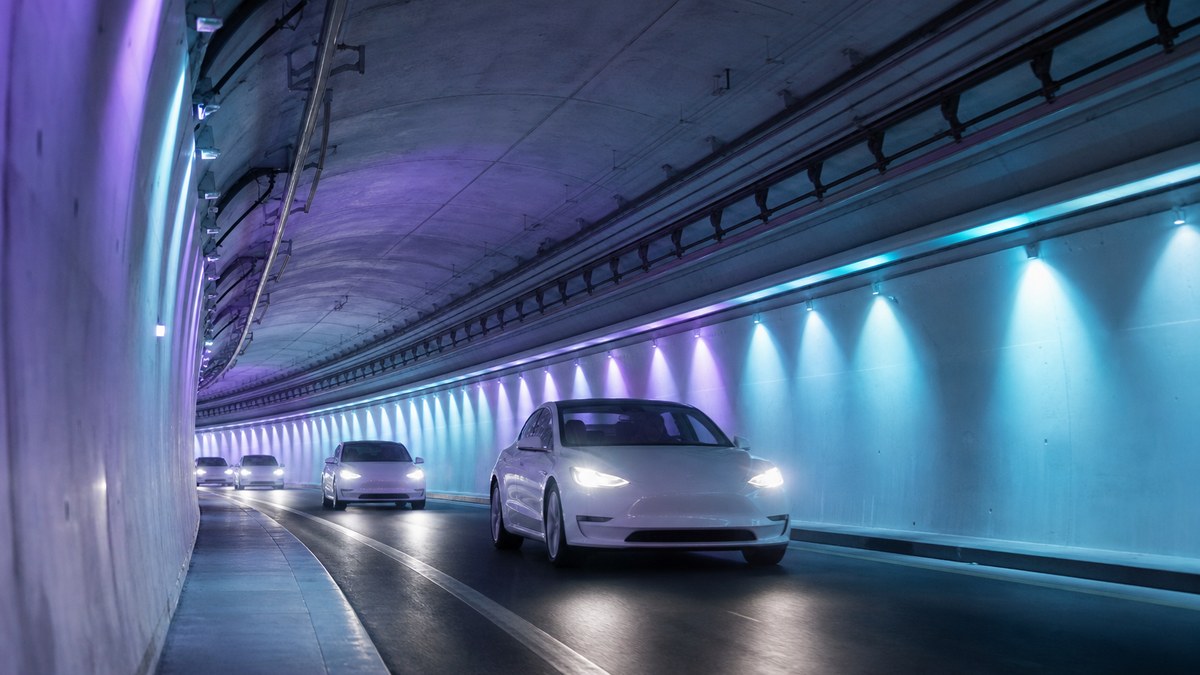
The Vegas Loop expansion is entering its biggest week yet. A new station on Paradise Road, across from UNLV's Thomas & Mack Center, is expected to open before the November 2026 Las Vegas Grand Prix, according to the LVCVA. About 13 stations are already open, Clark County has approved 123 in total over 68 miles, and airport rides still run partly on surface streets.
- This week: the Paradise Road (University Center) station near UNLV is "on track" for a temporary occupancy permit, and LVCVA President and CEO Steve Hill expects it to open by the end of the week (FOX5, Nov. 10, 2026).
- Open today: 13 stations, including five on the convention center campus plus Resorts World, Westgate, Encore, Fontainebleau, Sahara and Turnberry Towers, and curbside airport service (Vegas Daily Drop station list, checked Oct. 31, 2026).
- Approved build-out: 68 miles of tunnel and 123 stations after Clark County's zoning commission approved 19 more stations on Aug. 19, 2026.
- Ridership: 127,566 passengers during SEMA 2026 (Nov. 3–6), according to the Boring Company. The Las Vegas Sun put annual ridership at about 1 million in January 2026.
- Airport: rides to Harry Reid International began in late December 2025 for about $12, but the dedicated 2.25-mile airport tunnels are not open yet.
Few transport projects split opinion like the Vegas Loop. To supporters it is a privately funded, fast-growing underground shuttle that keeps convention crowds off the Strip's roads. To critics it is a tunnel full of ordinary electric cars that will never match rail, built by a company with a long list of safety and environmental violations. Both views have evidence behind them, which is why it is worth separating what has been confirmed by officials and regulators from what the Boring Company says it will do.
This week is a useful moment to do that. The Las Vegas Grand Prix brings hundreds of thousands of visitors to the valley from Thursday, Nov. 19, to the race on Saturday night, Nov. 21, and the LVCVA wants a new branch of the Loop running in time. Here is the state of play.
What is the Vegas Loop?
The Vegas Loop is an underground transit network built and operated by Elon Musk's Boring Company. Instead of trains, it uses electric cars driven through narrow tunnels between stations at resorts and the Las Vegas Convention Center. It started as the 1.7-mile Las Vegas Convention Center Loop, which opened in June 2021 at a cost of about $53 million paid by the LVCVA. Since then it has grown into a resort network, with the Boring Company funding the tunnels and resorts or landowners paying for their own stations.
Clark County approved the wider system in 2021 under a 50-year franchise, initially for 52 stops over about 16 miles. That plan was enlarged to 65 miles and 69 stations in May 2023, then to 68 miles and 104 stations, and, after the August 2026 approvals reported by the Las Vegas Review-Journal, to 123 stations. The City of Las Vegas separately approved a downtown extension in June 2022 and issued its first permit for tunnel work toward downtown in January 2026.
Which Vegas Loop stations are open right now?
Counts vary depending on the date and whether the two airport curbside stops are included. The Boring Company said 14 stations were in service during SEMA 2026 in early November. An independent station guide, Vegas Daily Drop, listed 13 open stations as of Oct. 31, 2026, built from the official Vegas Loop site.
| Station | Status (Nov. 2026) | Opened | One-way fare* |
|---|---|---|---|
| LVCC West, Central, South, Riviera | Open | 2021–2022 | Free on campus |
| LVCC Central Plaza (Encore link) | Open | April 2025 | $4.75 |
| Resorts World | Open | July 2022 | $4.75 |
| Westgate | Open | January 2025 | $4.75 |
| Encore | Open | April 2025 | $4.75 |
| Fontainebleau | Open | February 2026 | $7.00 |
| Sahara | Open | August 2026 | $7.50 |
| Harry Reid Airport T1 & T3 (curbside) | Open, departures | December 2025 | $12–$14 |
| 4744 Paradise Rd (near UNLV / Thomas & Mack) | Expected this week | — | TBA |
| Hughes Center / Virgin Hotels | Being completed | No date | TBA |
*Fares as listed on vegasloop.com and compiled by Vegas Daily Drop on Oct. 30–31, 2026; a day pass on the resort routes was $13.25. Opening dates per Wikipedia's station table and local reporting. Fares can change daily.
What opens before the Las Vegas Grand Prix?
The headline is the Paradise branch, also called the University Center Loop, which runs under Paradise Road toward UNLV. The station at 4744 Paradise Road sits across from the Thomas & Mack Center. Boring began in that direction in April 2024, and the Boring Company said tunneling toward the UNLV area was finished in September 2024. The stations themselves took much longer.
On Nov. 10, FOX5 reported that the Paradise Tunnels were "on track to receive a temporary occupancy permit this week," and that every Loop stop must pass inspections before it opens. Steve Hill of the LVCVA said he expects the station to open "by the end of this week," and that stations near the Thomas & Mack and Gordon Biersch "will connect to the rest of the system." A stop near the Hughes Center and Virgin Hotels is still being completed, with no announced date.
Two points matter here. First, the opening date is an LVCVA expectation, not a confirmed Boring Company announcement, and depends on inspections. Second, nobody has published a ridership forecast for race week: the LVCVA told FOX5 it does not yet have projected numbers. Hill's own estimate is that a station can probably handle "a few thousand people an hour."
The Paradise branch is the first real test of the Loop as transit rather than a convention shuttle. Until now almost every station has been at a resort or on the convention campus. A stop across from the university's arena, on a public road corridor with offices and hotels, shows whether people who are not attending a trade show will pay to ride it. Race week will bring crowds, but the more telling numbers will come in January and February, on ordinary weekdays.
Can you take the Vegas Loop to the airport?
Yes, partly. Since late December 2025, Loop vehicles have carried passengers from Resorts World or Westgate to Terminals 1 and 3 at Harry Reid International Airport. The Las Vegas Review-Journal and Interesting Engineering reported the launch at about $12 per ride, departures only, from 10 a.m. to 9 p.m. Clark County's Department of Aviation approved the company's Automated Vehicle Identification permit, and airport pick-ups were to follow once every vehicle had a transponder, using the Zero Level areas used by limousines and shuttles.
The important detail is that these are not tunnel rides all the way. The Nevada Transportation Authority approved limited surface travel through a Boring subsidiary, Paradise Transportation, capped at four miles above ground per trip, and required every trip to include part of the tunnel. In practice, the car leaves the tunnel and drives on public streets to the terminal curb.
The real airport connection is a pair of 2.25-mile tunnels. Boring Company President Steve Davis targeted the first quarter of 2026 for that segment. That date has passed. In late October, Hill told the Review-Journal the FAA environmental review was "very close to finalizing," and a Boring Company director said in July only that it was "a few months" away. The company has claimed the airport link could handle 17,000 to 20,000 people an hour once open; that is a company projection, not a measured figure.
How many people actually ride the Vegas Loop?
Ridership figures come almost entirely from the Boring Company, so they should be read as company claims. With that caveat:
| Figure | Value | Source and date |
|---|---|---|
| SEMA 2026 (Nov. 3–6) | 127,566 passengers on 14 stations | Boring Company post, Nov. 7, 2026 |
| CONEXPO-CON/AGG 2026 (March) | About 82,000 passengers | Company figures, reported Nov. 2026 |
| Busy convention day | About 40,000 riders | Boring Co. director Mike Baier, July 27, 2026 |
| Total since June 2021 | More than 4 million passengers | Boring Company |
| Annual ridership | About 1 million a year | Las Vegas Sun, Jan. 29, 2026 |
| Projection with airport tunnels | 5–10 million a year | Boring Company and LVCVA expectation |
| Measured peak, 2021 | 1,355 passengers per hour (vs. ~4,400/hour target) | 2021 testing and reporting, via Wikipedia |
The pattern is clear: the Loop is very busy during big conventions and much quieter on ordinary days. EVXL, which analysed the company's own numbers in July 2026, estimated that the five-year average works out to roughly 2,200 rides a day. That is the main argument critics make, including UNLV assistant professor Ben Leffel, who told The Guardian in June 2026 that tunnels with cars cannot beat rail on capacity.
How is the Vegas Loop paid for, and is it taxed like Uber?
The business model is unusual. The Boring Company pays for the tunnels and runs the service. Resorts and property owners pay for stations that connect to their buildings. The LVCVA paid for the original convention center loop and pays the company to operate it, which is why rides on the convention campus are free. Hill told FOX5 this week that the system "does not cost taxpayers," which is the LVCVA's position; the original convention center loop was funded by the authority, whose money comes from room taxes.
The tax question is newer. At a legislative hearing reported by the Las Vegas Sun in January 2026, State Sen. Dina Neal asked why Loop rides that now travel on public streets are not taxed like ride-hailing. Nevada Transportation Authority Chairman Vaughn Hartung said Loop vehicles cannot be classed as transportation network companies or taxis and are treated like limousines. Rideshare and taxi trips pay a 3% excise tax in Nevada. The Livery Operators Association of Las Vegas has filed a petition for judicial review of the authority's decision, so the courts may yet shape how far surface rides can go.
What safety and environmental problems has the Loop had?
This is the part of the story the company's marketing leaves out, and it is well documented by regulators:
- February 2024: Nevada OSHA fined the Boring Company about $112,000 over eight serious violations found in 2023, including worker exposure to chemical sludge. The company contested them.
- May 2025: Nevada OSHA proposed a $400,000 fine after two firefighters suffered chemical burns during training in the tunnels. Fortune reported in November 2025 that the fines were rescinded a day after a meeting involving Boring President Steve Davis and state officials.
- October 2025: ProPublica reported nearly 800 environmental violations documented by state regulators, mainly unpermitted discharges and digging, since a 2022 compliance agreement.
- Oct. 28, 2025: the Clark County Water Reclamation District issued a notice of violation and a $500,000 fine for dumping apparent drilling fluid into the sewer system, starting in April 2025.
- May 19, 2026: Clark County approved revised safety requirements, including building-code upgrades for fire suppression, emergency ventilation and exits.
There is another side. The LVCVA's chief strategy officer, Ed Finger, told legislators that the authority had stepped up oversight, including sending a former OSHA employee to construction sites, and said: "There have been events where we, and the Boring Company, should have been better." The Loop has also received the TSA's Gold Standard Award for security and emergency preparedness.
Private money building public infrastructure is not a problem by itself; Nevada has relied on private resort spending for decades. The problem is accountability. A rescinded OSHA fine and hundreds of documented discharge violations are exactly the record that should make county and state regulators more demanding as the network moves under public roads. The May 2026 code update was a good step. Publishing regular, independently checked ridership and safety data would be a better one.
Are the cars self-driving yet?
Not routinely. Loop cars are Teslas driven by employees. The company began supervised Full Self-Driving trials inside the tunnels in October 2025. EVXL reported in July 2026 that a reporter took six rides that week and none used FSD, and a company director said the software did not yet support every route. Tesla did name Las Vegas among its next robotaxi markets in its July 2026 earnings report, without a timeline, so autonomy in the tunnels and on the surface is something to watch rather than something that exists today.
What else is planned: downtown, Allegiant Stadium and beyond?
The long-term map, as approved, reaches downtown and Fremont Street, the Las Vegas Medical District, Chinatown, Allegiant Stadium, the airport and many Strip resorts. Approvals are not construction, though. The project needs hundreds of permits; NVBEX reported in January 2026 that roughly 100 of about 600 had been issued at that point. The company's own tentative completion window for the full network is 2028 to 2029.
Some plans have also fallen through. In January 2026, UNLV declined a station directly on its campus, citing parking concerns, even though the Boring Company offered to build it for free. Nevada's university regents instead approved selling the company a strip of parking land between Tropicana Avenue and Naples Drive. Elsewhere, the Boring Company's earlier proposals in Los Angeles, Chicago and Washington were dropped, which makes Las Vegas its flagship.
Where does the Loop fit with Brightline West and other transit?
The Loop is a local shuttle, not regional transit. The big regional project, Brightline West's high-speed rail line between Las Vegas and Southern California, is still waiting on a $6 billion federal loan through the RRIF program and now targets 2029, FOX5 reported on Oct. 27, 2026. If it is built, its Las Vegas station south of the Strip would be an obvious place for a Loop connection, and the original 2021 franchise did list a Brightline stop. Hill himself described the Loop this week as "a supplement" to the region's transport system, not a solution to all of it.
What does the Vegas Loop mean for Arizona?
There is no Boring Company tunnel project in Arizona today, and no public proposal for one in Phoenix. The most direct Arizona link is aspirational: Boring President Steve Davis said in January 2026, as reported by NVBEX, that he was interested in a Las Vegas to Phoenix hyperloop, but that tunneling would need to get much faster first. That is an idea, not a plan.
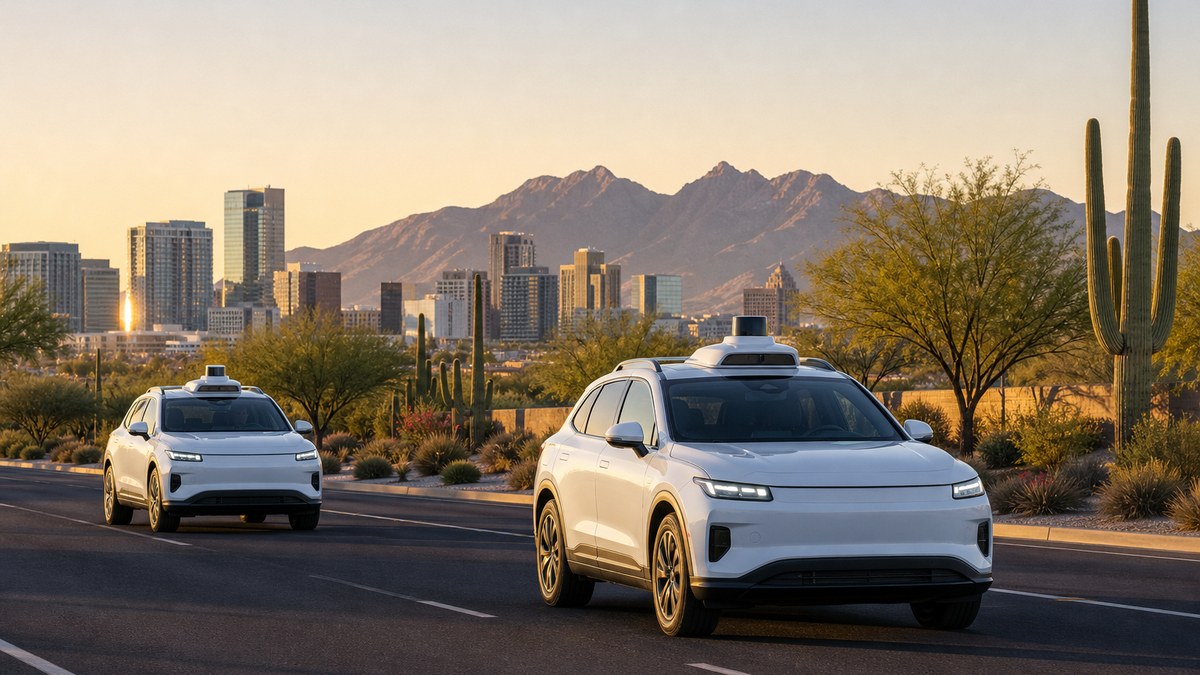
The more useful comparison is how the two metros are approaching the same problem. Las Vegas is betting on tunnels with human-driven cars, financed privately. Phoenix is betting on driverless cars on existing roads. Waymo now covers roughly 350 square miles of the Valley after adding 55 square miles in Gilbert and Chandler in August 2026, according to KJZZ, and says Mesa Gateway Airport will be added as a stop. Waymo also paused freeway trips in Phoenix for about two months in mid-2026 for software updates before gradually bringing them back in July.
For Arizonans, the practical angle is travel. Phoenix is one of the closest major markets to Las Vegas, and anyone flying or driving in for the Grand Prix, a convention or CES in January will find more Loop stations than a year ago, a $12-plus option to the airport, and a new stop near UNLV if inspections go as the LVCVA expects.
| Las Vegas (Vegas Loop) | Phoenix (robotaxis) | |
|---|---|---|
| Approach | Private tunnels, electric cars with drivers | Driverless cars on public roads and freeways |
| Coverage | ~13 stations open; 123 approved over 68 miles | ~350 sq. miles (Waymo, Aug. 2026) |
| Airport link | Partly tunnel, partly surface; 2.25-mile tunnels pending | Mesa Gateway stop announced by Waymo |
| Main public concerns | Worker safety, discharges, taxation, real capacity | Software incidents, freeway pause in 2026 |
What to watch next
- Race week: whether the Paradise station opens on schedule and whether the Boring Company or LVCVA publishes Grand Prix ridership.
- Airport tunnels: the FAA environmental decision and a firm opening date for the 2.25-mile connector.
- Courts and tax: the livery operators' challenge to surface rides, and whether the 2027 Legislature takes up a tax on Loop trips.
- Safety data: how the May 2026 county code changes are enforced as tunnels reach public roads.
- CES 2027: the next big convention test in early January.
Building transport, energy or tech projects in Nevada or Arizona?
SHYNE covers the technology and energy shaping the desert Southwest. Send us your project, data or story tip.
Email hgm@shyneltd.comFrequently asked questions
Is the Vegas Loop station near UNLV open?
It is expected to open this week. FOX5 reported on Nov. 10, 2026 that the Paradise Road station across from UNLV's Thomas and Mack Center was on track for a temporary occupancy permit, and LVCVA chief Steve Hill expects it to open before the Las Vegas Grand Prix. It still has to pass inspections.
How many Vegas Loop stations are there?
About 13 were open at the end of October 2026, and the Boring Company said 14 were in service during SEMA in November. Clark County has approved 123 stations over 68 miles in total, but most are not built yet.
How much does the Vegas Loop cost?
Rides between convention center stations are free. Resort routes such as Resorts World, Westgate and Encore were listed at $4.75 one way or $13.25 for a day pass in late October 2026, Fontainebleau at $7 and Sahara at $7.50. Airport rides cost about $12 to $14. Prices can change daily.
Does the Vegas Loop go to Harry Reid Airport?
Yes, but not fully underground. Since December 2025, Loop cars carry departing passengers from Resorts World or Westgate to Terminals 1 and 3, with part of the trip on surface streets. The dedicated 2.25-mile airport tunnels are still awaiting approval and have no confirmed opening date.
Are Vegas Loop cars self-driving?
Not routinely. Cars are driven by employees. Supervised Full Self-Driving trials started in the tunnels in October 2025, but a company director said in July 2026 that the software did not yet support every route.
Who pays for the Vegas Loop?
The Boring Company funds and digs the tunnels and operates the service. Resorts and landowners pay for stations connected to their properties. The LVCVA paid about $53 million for the original convention center loop and pays to operate rides on its campus.
Has the Boring Company been fined in Nevada?
Yes. Nevada OSHA fined it about $112,000 in 2024 for eight serious violations, and a later $400,000 OSHA fine was rescinded in 2025. The Clark County Water Reclamation District issued a $500,000 fine in October 2025 for dumping drilling fluid into the sewer, and ProPublica reported nearly 800 environmental violations.
Is there a Boring Company tunnel in Arizona?
No. There is no Boring Company tunnel project in Phoenix or elsewhere in Arizona. Company president Steve Davis has said he is interested in a Las Vegas to Phoenix hyperloop, but only if tunneling becomes much faster.
Will the Vegas Loop help during the Las Vegas Grand Prix?
The LVCVA expects it to take some traffic off the roads and says a station can probably move a few thousand people an hour. It has not published a ridership projection for race week, and the Loop serves only part of the Strip.
Keep reading
Sources
- FOX5 Las Vegas, Loop station near UNLV expected to open by start of F1 race week (Nov. 10, 2026).
- Las Vegas Review-Journal, Vegas Loop Paradise tunnels racing toward opening ahead of Las Vegas Grand Prix (2026).
- Las Vegas Review-Journal, Vegas Loop approved for nearly 20 new stations (Aug. 2026).
- Las Vegas Review-Journal, Boring Co. Vegas Loop hits another milestone with Reid Airport rides (Dec. 2025).
- Interesting Engineering, Vegas Loop starts $12 trips to Harry Reid in airport transit first (Dec. 30, 2025).
- Las Vegas Sun, Vegas Loop expansion beyond underground tunnels raises tax questions (Jan. 29, 2026).
- EVXL, Boring Company director puts real numbers on the Vegas Loop (July 27, 2026).
- BASENOR, Vegas Loop at SEMA 2026: 5 numbers (Nov. 7, 2026; company figures).
- Vegas Daily Drop, Vegas Loop stations 2026: open, opening soon and planned (updated Nov. 1, 2026).
- NVBEX, Boring Co. discusses expansion after UNLV denial and safety concerns (Jan. 19, 2026).
- Wikipedia, Vegas Loop (station opening dates, OSHA and water-district fines, with original citations).
- FOX5 Las Vegas, Brightline West still waiting on federal funding (Oct. 27, 2026).
- KJZZ, Waymo expands service area by 55 square miles into East Valley (Aug. 13, 2026).
- KJZZ, After a 2-month pause, Waymos gradually return to Phoenix freeways (July 30, 2026).
SHYNE reports on technology and energy for general information. Ridership, capacity and timeline figures from the Boring Company and the LVCVA are their own claims and projections and may change. Nothing here is investment advice.