Geothermal in Nevada: Fervo, Ormat, Zanskar and the race to power AI data centers
Google and Amazon are signing up for Nevada heat, Fervo now reports $11.9 billion in contracts, and a new geothermal bid just came in cheaper than solar plus batteries. Here is what is real, what is still a claim, and what it means for Arizona.
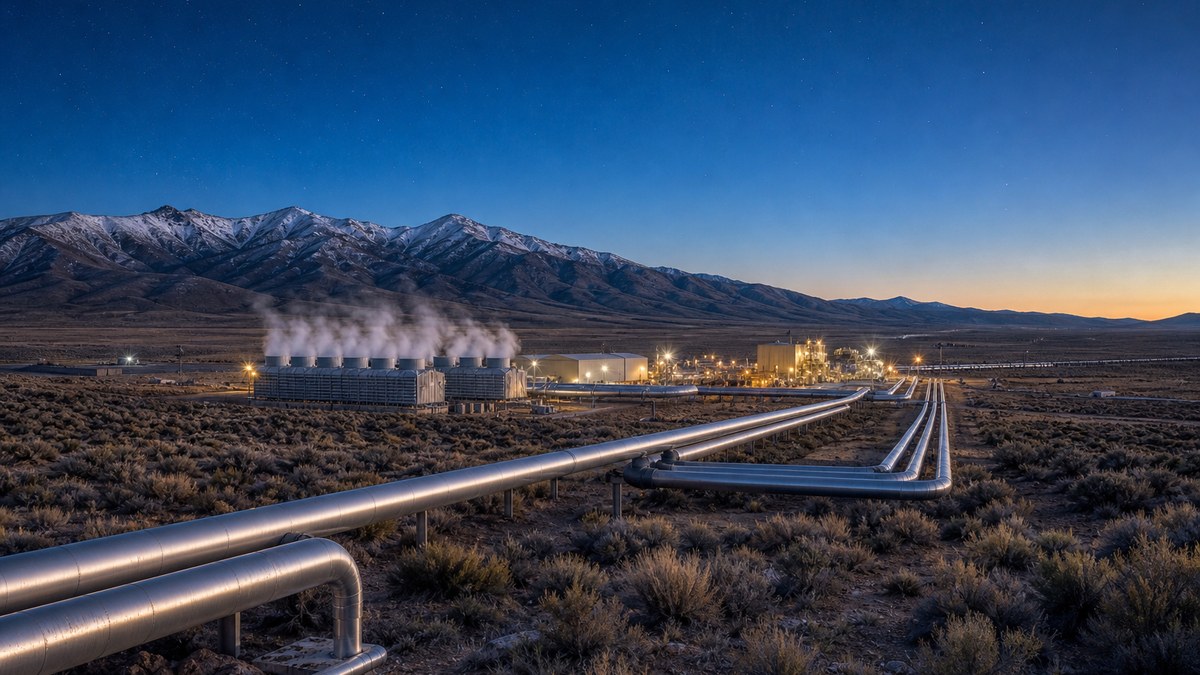
Geothermal in Nevada is moving from a niche to a contracted growth market. Google has deals for about 265 MW of new Nevada geothermal through NV Energy (Fervo's 115 MW Corsac Station and up to 150 MW from Ormat), Amazon has a pending 100 MW deal with Zanskar, and most new plants are targeted for 2028 to 2030.
- Fervo's backlog: 1,054 MW under binding power purchase agreements, about $11.9 billion of contracted revenue, up from 658 MW at the end of June (company, Nov. 9, 2026).
- Google in Nevada: Fervo's 115 MW Corsac Station under NV Energy's Clean Transition Tariff, approved by Nevada regulators in May 2025, plus a 150 MW Ormat portfolio announced Feb. 17, 2026, due online 2028 to 2030.
- Amazon in Nevada: a 20-year, 100 MW Zanskar–NV Energy contract for the Reno-area data centers, pending approval of NV Energy's 2026 resource plan (May 2026).
- Price signal: geothermal offers in NV Energy's 2026 plan averaged about $105.56/MWh for 180 MW, versus roughly $113.89/MWh for 4,370 MW of solar plus storage (as reported from the filing, Oct. 2026).
- New land: a federal lease sale drew bids on 60 of 83 Nevada parcels for nearly $4.5 million; Ormat won 8 parcels, about 20,000 acres, for $2.29 million (Oct. 2026).
For decades, geothermal power in Nevada was steady, quiet and small: a few dozen plants in the northern half of the state, many of them owned by Reno-based Ormat Technologies, selling power to NV Energy at prices nobody outside the industry followed. In 2026 that changed. The reason is the same one behind most energy headlines in the region: AI data centers need large amounts of electricity around the clock, and their owners want it to be carbon-free.
Solar is cheap in the desert but stops at sunset. Batteries stretch it by four hours or so. Natural gas runs all night but carries emissions and fuel-price risk. Geothermal, which turns underground heat into steam or hot fluid that spins a turbine, runs day and night at a steady output. That "clean firm" quality is why Google, Amazon and other buyers are now paying premiums to get it, and why Nevada, with its hot, faulted Basin and Range geology, is at the center of the story. We covered the wider power fight in AI data centers in Nevada and Arizona: the power, water and gas-plant fight; this article focuses on the heat underneath it.
Why is geothermal suddenly a big deal in Nevada?
Three things arrived at once. First, demand: data-center campuses near Reno and Las Vegas are asking NV Energy for far more capacity than the utility has. Second, technology: "enhanced geothermal systems" (EGS), which borrow horizontal drilling and fracturing methods from the oil and gas industry, promise to make geothermal possible in many more places than the rare natural hot springs and fault zones that conventional plants rely on. Third, policy: under the 2025 federal tax law, geothermal keeps its clean-electricity tax credit for projects that start construction through 2033, while wind and solar projects that did not start construction by July 4, 2026 must be in service by the end of 2027, according to analyses of the law. That gap makes geothermal relatively more attractive for projects that will be built late this decade.
Conventional geothermal in the United States totals only about 4 GW of installed capacity, most of it in California, according to Canary Media (Dec. 4, 2025). Nevada is the country's second-largest geothermal state. The new contracts below would add hundreds of megawatts on top of that base within about five years, if they are built on schedule.
What is Fervo doing in Nevada?
Houston-based Fervo Energy is the best-known enhanced-geothermal company, and Nevada is where it proved the concept. Its Project Red pilot in northern Nevada "has been generating 3 MW of gross power to the Nevada grid since 2023," the company said on Sept. 22, 2026. That pilot led to Fervo's first commercial plant, Cape Station, which is in Milford, Utah rather than Nevada, but which matters to Nevada because it tests whether the technology works at scale.
Fervo's third-quarter results, published Nov. 9, 2026, reported these milestones (all company statements, and financials unaudited):
- Cape Station Phase I GeoBlock 1 (about 33 MW) declared commercial operation on Sept. 30, 2026, ahead of its contractual date.
- GeoBlock 2 has synchronized with the grid and is delivering test energy; GeoBlock 3 is mechanically complete. Both are expected to reach commercial operation by Jan. 1, 2027, completing Phase I at about 100 MW.
- Binding contracts now total 1,054 MW and about $11.9 billion of revenue, after a 15-year, 396 MW take-or-pay deal with Google for a Utah expansion called Cape Google 400, with first power expected mid-2028.
- Expected cost is about $7,000 per kilowatt for the first 100 MW and $5,500 per kilowatt for Cape Google 400, with a long-term target of $3,000.
- Third-quarter revenue was $116,000 (the plant had only just started), with $1.916 billion of cash at quarter end. Fervo listed on Nasdaq as FRVO in 2026.
In Nevada, Fervo's flagship is Corsac Station, a planned 115 MW enhanced-geothermal project that will supply Google's data centers in Storey County through NV Energy. On Sept. 22, 2026 Fervo also said it had won two U.S. Department of Energy awards worth about $20 million combined, subject to final agreements, including a targeted appraisal campaign at "a high-priority EGS prospect in Humboldt County" in Nevada to confirm whether the rock there is suitable.
| Fervo item | Figure | Status and source |
|---|---|---|
| Project Red (Nevada pilot) | 3 MW gross | Operating since 2023 (Fervo, Sept. 22, 2026) |
| Corsac Station (Nevada) | 115 MW for Google via NV Energy | Tariff approved May 2025; no public online date (Latitude Media) |
| Humboldt County appraisal | Part of ~$20M in two DOE awards | Selected; subject to funding agreements (Fervo) |
| Cape Station Phase I (Utah) | ~100 MW in three ~33 MW blocks | Block 1 commercial Sept. 30, 2026; rest by Jan. 1, 2027 (company target) |
| Contracted backlog | 1,054 MW / ~$11.9B | Company, Q3 2026 (Nov. 9, 2026) |
| Installed cost target | $7,000 → $5,500 → $3,000 per kW | Company estimates and goal |
Fervo has crossed the line that matters most: a commercial enhanced-geothermal block is selling power on a schedule it promised. That does not make the economics proven. At $5,500 to $7,000 per kilowatt, its plants still cost several times more to build than a solar farm, and revenue so far is tiny. The next 18 months, when Cape Station runs at full output and Corsac moves toward construction, will show whether the cost curve bends the way the company says it will. For Nevada, the most useful near-term signal is not the backlog headline but a firm construction start date for Corsac.
How does Google's Clean Transition Tariff work?
Google could not simply buy power from Fervo directly, because NV Energy is a regulated monopoly utility. So in June 2024 Google and NV Energy asked the Public Utilities Commission of Nevada to approve a new "Clean Transition Tariff" (Utility Dive, June 21, 2024). The structure is straightforward: NV Energy buys the geothermal output from Fervo and sells it to Google at a set rate. Google gets credit for the project's energy and capacity on its data-center bills, and Google pays the difference between the cost of the geothermal power and the cheaper resource, such as solar or gas, that NV Energy would otherwise have used. In other words, the large customer pays the premium, not other ratepayers.
The commission approved the tariff in May 2025 (Latitude Media, May 15, 2025). At the time, Fervo said contracting and investment would happen "over the next two to five years," the supply agreement and power contract still needed to be finalized, and it was already discussing expanding Corsac. Latitude reported that "the primary bottleneck, though, is interconnection," meaning access to transmission lines.
The same tariff route is now being used by others. On Feb. 17, 2026, Ormat said it had signed a deal with NV Energy to supply Google with up to 150 MW from "a series of new geothermal projects across Nevada," expected to come online between 2028 and 2030 (Reuters via The Star). Ormat has not publicly named the plants.
What are Ormat and Sage building?
Ormat, headquartered in Reno, is the incumbent. It owns and operates many of Nevada's existing geothermal plants and makes its own turbines. Beyond the Google portfolio, two recent moves show where it is heading.
- New federal leases. In a Bureau of Land Management geothermal lease sale reported on Oct. 20, 2026, bids came in on 60 of 83 Nevada parcels, for nearly $4.5 million in total. Ormat won 8 parcels covering about 20,000 acres for $2.29 million, including the top bid of $201 per acre for a 3,841-acre parcel in White Pine County. Invenergy won the most acreage, about 37,000 acres for $694,947, and Glovate LLC took 6 parcels and about 24,000 acres for $570,601. More than a third of the leases sold at the $2-per-acre minimum. (These figures come from a secondary news summary; we did not find the BLM's own results page.)
- Enhanced geothermal at an existing plant. Sage Geosystems is running "Project Vector," an EGS project at Ormat's Blue Mountain geothermal plant in Nevada, under a strategic agreement with Ormat. On Nov. 11, 2026 Sage said it had hired Halliburton for well cementing and reservoir stimulation (ThinkGeoEnergy). Sage has not published an output figure or timeline for the Nevada project.
The Blue Mountain project matters because it tests a cheaper path: adding enhanced wells to a site that already has a power plant, a grid connection and permits, rather than starting from bare desert.
Who is Zanskar, and what is the Amazon deal?
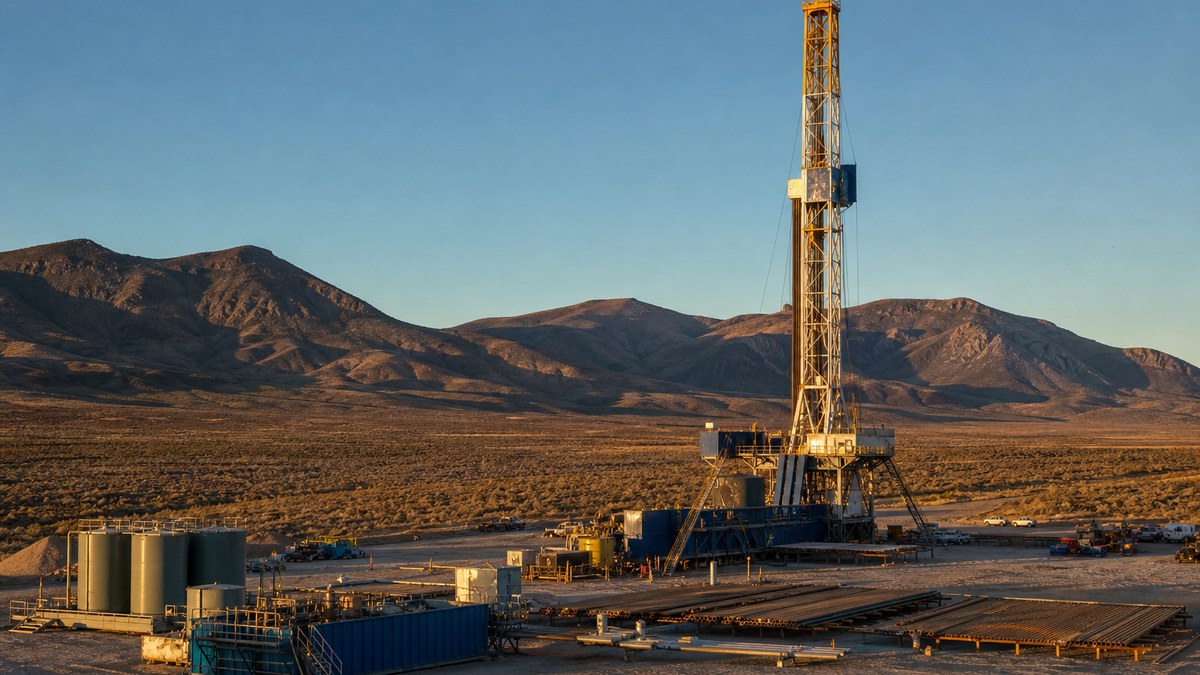
Zanskar, based in Salt Lake City, takes the opposite approach to Fervo. Instead of engineering new reservoirs, it uses AI software and survey data to find natural geothermal systems that have no surface signs, so-called "blind" systems. In December 2025 it announced a discovery it calls "Big Blind" in western Nevada. Two test wells drilled in summer 2025 hit a porous layer at about 2,700 feet with temperatures around 250°F, and the company says the site could support more than 100 MW and come online in three to five years (Canary Media, Dec. 4, 2025). Those are company claims; independent resource estimates have not been published.
In May 2026 Amazon said it would back 100 MW of new geothermal generation for its data-center operations in the Reno area, working with NV Energy. Zanskar has signed a 20-year, 100 MW power purchase agreement with NV Energy, but it "is yet to be finalized pending the approval of NV Energy's 2026 Integrated Resource Plan" by the Nevada commission (ThinkGeoEnergy, May 12, 2026). Amazon said the geothermal deal is part of a larger package with 600 MW of solar and 600 MW of battery storage, and that it will cover the cost of new energy infrastructure for its data centers so other customers do not pay for it. Zanskar raised a $115 million Series C and $40 million of development financing in 2026, according to the same report.
Zanskar is also preparing to drill elsewhere in the state. On Nov. 11, 2026, ThinkGeoEnergy reported that the BLM had approved a categorical exclusion, a faster form of environmental review, for Zanskar's "Not Much Geothermal Exploration Project" in Elko County north of Battle Mountain. The plan calls for 15 confirmation wells (5 slim observation wells, 5 production wells and 5 reinjection wells) on five pads, with no more than 20 acres of surface disturbance and a 30-day appeal period before the decision is final.
| Developer | Nevada project | Buyer | Size | Timing / status |
|---|---|---|---|---|
| Fervo | Corsac Station (EGS) | Google via NV Energy | 115 MW | Tariff approved May 2025; online date not public |
| Ormat | Portfolio of new plants | Google via NV Energy | Up to 150 MW | 2028–2030 (Feb. 2026) |
| Zanskar | Reno-area supply | Amazon via NV Energy | 100 MW, 20 years | Pending 2026 IRP approval |
| Zanskar | Big Blind, western NV | Not announced | >100 MW (claim) | 3–5 years (Dec. 2025 claim) |
| Sage + Ormat | Project Vector, Blue Mountain (EGS) | Ormat plant | Not disclosed | Well services contracted Nov. 2026 |
Is geothermal now cheaper than solar plus batteries in Nevada?
In one important comparison, yes, though with caveats. NV Energy's 2026 Integrated Resource Plan includes a volume listing offers from developers. As reported from that filing in October 2026, three geothermal offers came in at $105 to $107 per megawatt-hour, a weighted average of about $105.56/MWh for 180 MW. Eleven solar-plus-storage offers, mostly paired with four-hour batteries, averaged about $113.89/MWh across 4,370 MW. Some solar prices rose sharply between plans: one project's offer reportedly went from about $85/MWh in the 2024 plan to about $125/MWh in 2026, citing permitting delays, land costs, financing and tariffs.
The caveats matter. These are offers in a resource plan, not signed contracts at final prices. Two of the three geothermal offers and two solar offers are "sleeved" deals tied to specific large customers, which can change who pays. Solar-plus-storage is also being offered in volumes more than twenty times larger. And geothermal's real advantage is not price per megawatt-hour but that it runs at night, when solar plus four-hour batteries runs out.
| Resource (NV Energy 2026 IRP offers) | Offers | Capacity | Weighted price |
|---|---|---|---|
| Geothermal | 3 | 180 MW | ~$105.56/MWh |
| Solar + storage (mostly 4-hour) | 11 | 4,370 MW | ~$113.89/MWh |
| 2024 plan solar + storage (for comparison) | 3 | — | ~$94/MWh |
Source: figures as reported from NV Energy's 2026 IRP, Volume 8 (October 2026 analysis). Offers, not executed contracts.
The price crossover is real news, but it says as much about solar as about geothermal. Solar costs in Nevada have risen because of tariffs, interest rates and slow permitting, not because geothermal suddenly became cheap. The fair reading is that firm, around-the-clock clean power is now competitive with the "solar plus batteries" combination it used to lose to, at least for the first few hundred megawatts. The Nevada commission's ruling on the 2026 resource plan will be the first real test of whether regulators agree.
What could slow Nevada's geothermal buildout?
- Transmission. Many geothermal sites are in remote northern and central Nevada. NV Energy's Greenlink lines, meant to connect Las Vegas, Yerington and Ely, are central to moving that power. On Nov. 16, 2026, Mountain West News Bureau reported that work on part of Greenlink West on federal land had been paused for over a month after a prayer led by Yerington Paiute tribal members in an area the tribe holds sacred.
- Permits and federal land. Most Nevada geothermal resources sit under BLM land. Faster tools like categorical exclusions help with exploration wells, but full power plants still need full reviews.
- Drilling risk. A promising temperature in a test well does not guarantee a reservoir that flows enough hot fluid for decades. Both "blind" discoveries and engineered reservoirs carry this risk.
- Cost. Even Fervo's lower target of $5,500 per kilowatt is expensive; buyers like Google and Amazon are paying a premium that ordinary customers would not.
- Water and cooling. Many geothermal plants use air cooling and reinject fluids, but drilling and some cooling designs need water, a sensitive topic in the desert.
- Regulatory timing. Amazon's deal and others depend on how and when the Nevada commission rules on NV Energy's 2026 resource plan.
What does Nevada's geothermal boom mean for Arizona?
Arizona does not have a commercial geothermal power plant of its own, and its best-known clean-energy story is solar and batteries: Arizona led the country in new energy storage in the second quarter of 2026 (KTAR, Sept. 4, 2026), and data-center growth around Phoenix is pushing APS and SRP to add capacity quickly. Arizona utilities have bought geothermal from out of state before. Salt River Project signed a 24-year, 50 MW contract with CalEnergy's California geothermal plants covering 2016 to 2039 (ThinkGeoEnergy, Sept. 17, 2013).
Nevada's deals matter to Arizona in three ways:
- A template. NV Energy's Clean Transition Tariff shows how a monopoly utility can let a large customer pay extra for a specific clean firm resource without raising other customers' bills. Arizona regulators and utilities face the same data-center pressure, and the debate over how to charge data centers is already a political issue in Phoenix.
- Competition for the same buyers. If Nevada can offer hyperscalers 24/7 clean power, that is one more factor in where the next AI campus goes. Arizona has land, chips (see our explainer on TSMC Arizona) and solar, but less firm clean supply.
- Regional power trading. Nevada and Arizona share Western transmission and markets. Geothermal output from northern Nevada will mostly serve Nevada customers in the near term, but firm clean power anywhere in the region helps the evening peak problem that both states share.
Geothermal is also not the only firm option. Arizona is home to Palo Verde, the largest U.S. nuclear plant, and we looked at hydrogen as another firm fuel in Green hydrogen in Nevada and Arizona. Battery recycling and second-life storage, covered in Redwood Materials in Nevada, is a different answer to the same problem.
Nevada and Arizona compared
| Nevada | Arizona | |
|---|---|---|
| Geothermal plants | No. 2 U.S. state; dozens of plants, mostly north | No commercial plant in state |
| New contracted geothermal | ~365 MW announced for Google and Amazon (some pending) | None announced; SRP buys 50 MW from California (2016–2039) |
| Main clean firm path | Geothermal, plus gas and storage | Nuclear (Palo Verde), gas, storage |
| Data-center tariff model | Clean Transition Tariff (approved May 2025) | Under debate |
| Next milestone | PUCN ruling on NV Energy's 2026 IRP | Utility resource plans and data-center rate cases |
What to watch next
- NV Energy's 2026 resource plan: whether the commission approves the Zanskar–Amazon contract and the geothermal offers.
- Cape Station Phase I: whether GeoBlocks 2 and 3 reach commercial operation by Jan. 1, 2027, as Fervo expects.
- Corsac Station: a public construction start and online date for Fervo's 115 MW Nevada plant.
- Ormat's Google portfolio: which Nevada sites make up the 150 MW, and first construction.
- Zanskar's drilling: results from the Elko County confirmation wells and progress at Big Blind.
- Greenlink West: how and when construction resumes after the pause on federal land.
- Fervo's Humboldt County appraisal: whether the DOE-backed wells confirm a second Nevada EGS site.
Working on geothermal, drilling or clean firm power in Nevada or Arizona?
SHYNE covers the technology and energy shaping the desert Southwest. Send us your project, your data or your story tip.
Email hgm@shyneltd.comFrequently asked questions
What is geothermal energy?
Geothermal energy is heat from inside the Earth. Power plants pump up hot water or steam from wells, use it to spin a turbine, then reinject the fluid underground. Unlike solar or wind, a geothermal plant can run at steady output day and night.
Why does Nevada have so much geothermal?
Nevada sits in the Basin and Range region, where the Earth's crust is stretching and thin, and faults let heat and hot water rise closer to the surface. That geology makes it the second-largest U.S. geothermal state after California.
What is enhanced geothermal (EGS)?
Enhanced geothermal systems create or improve an underground reservoir in hot rock that lacks enough natural fluid flow, using horizontal drilling and fracturing methods adapted from oil and gas. Fervo and Sage Geosystems are both developing EGS projects in Nevada.
Is Fervo's Corsac Station built yet?
No. Corsac Station is a planned 115 MW project in Nevada that will supply Google through NV Energy. The tariff that allows the deal was approved in May 2025, but a public construction start and online date have not been announced.
How much geothermal are Google and Amazon buying in Nevada?
Google has 115 MW from Fervo's Corsac Station and up to 150 MW from new Ormat plants due between 2028 and 2030. Amazon is backing 100 MW from Zanskar under a 20-year contract that still needs approval as part of NV Energy's 2026 resource plan.
Is geothermal cheaper than solar in Nevada?
Not cheaper than solar alone. In NV Energy's 2026 resource plan, geothermal offers averaged about $105.56 per megawatt-hour for 180 MW, below the roughly $113.89 average for solar paired with batteries. These are offers, not final contracts.
Will geothermal lower my NV Energy bill?
Not directly in the near term. Under the Clean Transition Tariff, the large customer such as Google pays the extra cost of the geothermal power compared with what NV Energy would otherwise buy, which is meant to protect other customers from the premium.
Does Arizona have geothermal power plants?
Arizona does not have a commercial geothermal power plant of its own. Salt River Project has bought 50 MW of geothermal from California plants under a contract running from 2016 to 2039, and Arizona relies mainly on nuclear, gas, solar and batteries.
What is a blind geothermal system?
A blind geothermal system is a hot underground reservoir with no surface clues such as hot springs or steam vents. Zanskar says its Big Blind site in western Nevada is one, found with AI-guided surveys and confirmed by two test wells in 2025.
Keep reading
Sources
- Fervo Energy, Fervo Energy Reports Third Quarter 2026 Results (Nov. 9, 2026).
- TechCrunch, Fervo now has $12B in orders for its geothermal power tech (Nov. 9, 2026).
- Fervo Energy via GlobeNewswire, Fervo Energy secures two DOE awards in Idaho and Nevada (Sept. 22, 2026).
- Utility Dive, Google, NV Energy seek approval for Clean Transition Tariff (June 21, 2024).
- Latitude Media, The clean transition tariff won approval in Nevada. What's next for Fervo? (May 15, 2025).
- Reuters via The Star, Ormat signs 150 MW geothermal power deal with NV Energy to supply Google in Nevada (Feb. 17, 2026).
- ThinkGeoEnergy, Zanskar to supply 100 MW of geothermal power to Amazon data centres (May 12, 2026).
- ThinkGeoEnergy, Zanskar receives Categorical Exclusion for Elko County project (Nov. 11, 2026).
- ThinkGeoEnergy, Sage taps Halliburton for EGS project in Nevada (Nov. 11, 2026).
- Canary Media, Zanskar claims major geothermal discovery in Nevada (Dec. 4, 2025).
- ORA News via Rallies, Ormat dominates US geothermal auction in Nevada (Oct. 20, 2026).
- ZeroHedge, Geothermal just undercut solar-plus-storage in sunny Nevada (Oct. 2026; analysis of NV Energy 2026 IRP Volume 8).
- KNPR / Mountain West News Bureau, Indigenous protests pause a high-power energy transmission project in Nevada (Nov. 16, 2026).
- ThinkGeoEnergy, CalEnergy signs 50 MW geothermal PPA with Arizona utility (Sept. 17, 2013).
SHYNE reports on technology and energy for general information. Contract sizes, costs, timelines and resource estimates from Fervo, Ormat, Zanskar, Sage, Google and Amazon are company statements and targets and may change. Resource-plan prices are developer offers, not final contracts. Nothing here is investment advice.